• Smogon Premier League is here and the team collection is now available. Support your team!

Media Top 10 MOST Evil Villains/Characters In Fiction

When mentioning characters, you must follow only one rule:

-All characters mentioned would require justification for answer.


-On the first Saturday of each month, the thread will pick and choose a top ten.
-When mentioning characters, please add a title. (THIS IS NOT REQUIRED)
EX: The Clown Prince Of Crime, the Joker.

NOTE: All villains from all sources of media including books, video games, short stories, anime and other shows, films, ARGs, etc., are allowed.
 
Last edited:
Hi!

Some preamble:

In a starting post to a thread like this, it's best to flesh it out with some more content, like examples of your own here and explanations why. That helps spark people's interest. Especially if you want people to fill in ideas for a topic you're interested in, and follow rules of yours to do so, it helps to add some more so we're all working together here to make something neat. Not a big deal, just something to keep in mind big picture.
______________________________________________________________________________

As far as engagement, part of what engages me here is what it means to be evil. I'll focus more on a narrative / character sense - what makes a character a vile, detestable, memorable villain - versus a real-world philosophy sense, although the two might naturally seep into each other.

On that front, I don't fully agree with the second rule. Sometimes, motivations can make a character more justifiable and sympathetic, sure. Those characters are probably not the most evil. I get where you're coming from there. Other times, less so.

If the motivations are flimsy and fake enough, they don't make the character more justifiable, but instead reinforce the character's delusional evil. Some villains at least have the cojones to face the facts and admit they are evil, but fake motivations make villains both evil and cowardly, making them even more despicable.

Thanos is a great example here. He pretends to care about what's right, what supposedly "has to be done," but his "solution" to overpopulation is utter nonsense. It's both temporary - beings will just increase their population again eventually - and destructive for no reason. Even among other temporary solutions, he could have just doubled resources instead of killing people. But bigger picture, with unlimited cosmic power at his fingertips, he could surely find some better long-term and constructive solution if he cared to. But his refusal to think about the possibility he is wrong establishes him as a weak coward. He possesses all the power in the universe, but he's still not strong enough to self-reflect and look in the mirror. No amount of stones to wear will change who he is in his heart – a fraud.

Still other times, motivations make a character's lowest deeds stand out even more. If they understand and value goodness enough to have real motivations, but still do some utterly unjustifiable harm, the evil stings even more as a betrayal of their principles, as a clear rejection of the freely open path of light and goodness versus "just their nature".

If we only consider villains without motivations, we tend to get very flat characters. And flat characters can work - Darth Vader is a great setpiece, even before his depth is revealed - but I don't think it creates very interesting discussion here. My Baron Destructicus killed one billion children for no reason with his Children Annhiliation Ray, but your Master Murder killed all humans for no reason with his World Annhiliation Ray, so he wins?

A big old list of evil deeds with no fleshing out of the character, no explanation for why these deeds happen (doesn't have to justify, just help explain why), often struggles to land emotional weight because it doesn't require heart or effort. Sometimes, good storytelling, visual effects, etc. can cause even a flat character to land emotional weight, sure. But if we all agree on a most evil character here, and I make a new character who copies their list of evil deeds but adds even more, that'd "win" but be pretty unsatisfying.
______________________________________________________________________________

OK, that was more words than I expected. Let's talk about an awful villain! I unfortunately only have time for one right now, but might come back later.

I love The Sapphir'd King in exploring hierarchy, but to explain him, I need to give some background on how the Fallen London universe works.

Two big ideas here are the Judgments and The Great Chain of Being. The Judgments are the universe's many "gods." They create and enforce the laws of the universe, both the automatic like the laws of physics, and moral standards.

One of these moral laws is the Chain, the celestial hierarchy. Those at the top – the Judgments – are the strongest and only accountable to themselves. As you descend lower, beings are both weaker and deemed less deserving of power. For example, not only would it be very hard for a human to contact a Judgment, it would break the moral law. The Chain says that beings lower down need to seek influence amongst their equals versus interfering with their superiors. They need to stay in their lane, stay in their place.

So we have the mechanics of divine law. But what does the law exist to do? What is the master plan, the godly design of the Judgments?

As a wise man once said - specifically Chris Crawford, pioneer of interactive narrative video games – endings set the record on what stories are and mean. Two stories can be exactly the same, but at the end the hero wins in one, and at the end the villain wins in one, and suddenly these stories become rather different! The ending contextualizes everything before. Those identical lead-ups become a noble quest in one story, and a futile writhing in the other.

Sunless Skies employs this with devastation, showing us the end of all "lesser" creatures in the chain, like us. The souls of the dead flock to the Blue Kingdom, the domain of the Sapphir'd King, the Judgment who presides over the dead. After winding through the Kingdom's labyrinthine bureaucracy, souls who prove themselves worthy may pass through Death's Door. At last, they enter the King's chamber to see what lies after death.

He eats them.

The only purpose of the Blue Kingdom is to gather and prepare souls for The Sapphir'd King to feed on. The hierarchy of the Chain does not care about the lessers. It has no justice. It is purely a tool of the rulers, who only value beings they call lesser as property, to sustain them and fit their particular whims. For a lesser, sincere belief and deference leads only to being skewered and dissected.

I also have a post talking about Dimentio (and Count Bleck too) from Super Paper Mario here.
 
Last edited:
What do we care about, and why?

Screen Shot 2026-02-01 at 11.59.08 AM.png


You and your friends find out why Casey, your old friend, disappeared. The cultists in the abandoned mine shaft threw him, and others, down this hole. They sacrificed him to the Black Goat, an eldritch creature believed to lie within, and freely explain why.

The small town of Possum Springs was dying fast, for normal American reasons. The mine shut down. Poverty. Better jobs elsewhere. But when Jim Dorney slipped in the shaft, money started trickling back in. The cult started throwing people in on purpose to revitalize the town.

You kids don’t understand that–
We lost what our world was built around.
Used to be you provided for a family, bought a house.
Now you’re just stockin’ shelves at the grocery store.
Kids leave more than they’re stayin’. No opportunity here.
Old people dyin’, houses left empty.
You ever seen that?
A home become a tumble pile in the wood and plaster?
A job become a burned out brick box or a hole in the ground.

You have an expectation here. These sacrifices are horrible, but the cultists' soul-sucking poverty and desperation to provide for their loved ones at least, like, helps explains it. There's a reason, a motivation.

Bunch of old boys doing their damnedest to protect their own and their neighbors.

But then no.

Bea: Were any of you even miners back in the day?
Any of you hurting now? Financially, like?
Or is this just some big costume party murder club.
For someone’s shitty boss who’s afraid of dying?
-Beat-
Cult Leader: That don’t matter.
Bea: *snort* It does.

Bea, the character actually suffering under poverty, who is miserable providing for her mentally unwell father, who lives in a shitty apartment and couldn't afford to go to college, cuts to the bone.

No, the cult isn't killing people out of desperation. They're rich folks who don't care about the actual poor people they kill. They intentionally target "drifters, drunks, and delinquents," their neighbors who suffer the most under the town's ills, those who won't "be missed."

You'd think the reason to care about a town would be, well, the people in it. But the cult kills people in the town and does not care about those people. They care about the town in the abstract, and the story gives two pretty explicit reasons why.

They grew up in a more lively town and are sad to see their childhood home fade away. That's right, they're murdering people because they're sad about a rosy image of their childhood. They utterly refused to grow up and form a healthy, clear relationship with their past.

They're empty people who need a wealthy, higher-status location around them as a validation of themselves and their place in the world. They fed off the town's esteem as kids, which is more understandable, but they never found their internal wellspring of worth as adults. They kill off the supposedly inferior people who make the town lower-class, hoping that the town returns to its glory days, and their self-esteem vicariously benefits.

The game deconstructs these ideas with its point of view character, Mae. She's an immature NEET who dropped out of college, which makes her a prime target. (The cult debates sacrificing her, but choose to not, because they consider her parents worthy enough. Gross.)

But instead of seeing Mae as a tool, who might be good enough to assuage the cultist's sad fantasies and insecurities for another year, the game unapologetically sees her as a human, full of empathy. You see Mae's good and bad, her strengths and weaknesses, and the profound struggles and suffering she's had to endure and try to face.

And after leaving the cultists, Mae has this to say.

They're sad.
It's all really sad.

I said the cultists were sad to mock their immature reaction. Mae says they are sad out of empathy. She refuses to see these cultists as inhuman, despite their awful deeds, instead as people who are suffering even as they make others suffer.
And I agree with her.

Xykon and Edelgard seem like completely different villains.
Screen Shot 2026-02-01 at 12.57.27 PM.png
1769968673804.png


Xykon is a card-carrying villain, utterly uninterested in any pretense of justice or morality. Edelgard does not just use the rhetoric of justice, but has an actual real point to make, that the hierarchy of the Crest system is arbitrary and unjust.

Xykon is generally light-hearted, making whimsy and wisecracks, only showing his serious determination when the moment truly calls for it. Edelgard is bone-crunchingly serious, shaped by personal trauma, reserving any smidgen of vulnerability for rare episodes in the exclusive company of highly trusted people.

These seemingly opposite profiles go in the same despicable narrative direction, though. Twice the same direction.

They breed familiarity, conditioning and encouraging the reader to underplay their villainy, and they warp the characters to seek absolute personal power at any cost.

Familiarity first.

Xykon is funny and playful, and keeps it real over being pretentious, which gives him a legitimate likable and relatable element. Over the course of almost 1500 strips, you become more and more familiar with his presence, and the party is alive and well at the (thus far) end of it, and the world isn't destroyed. He's basically harmless, right?

Screen Shot 2026-02-01 at 1.08.21 PM.png

Screen Shot 2026-02-01 at 2.08.22 PM.png

A recurring theme is that, no matter how charismatic he is, he is irredeemably, unrepentantly, massively and pettily, both stone-cold evil and simply an asshole.

Screen Shot 2026-02-01 at 1.12.47 PM.png
Screen Shot 2026-02-01 at 1.14.39 PM.png


Xykon makes you come to grips with your own reaction as a reader. Is this the kind of guy I find funny? What does that say about me, and what I find likable in people?

Because at the core, all Xykon really cares about is Xykon's power. He wants pure childish tantrum freedom, for nobody to tell him what to do, for any reason, at any time, and he will viciously torture whoever it helps to torture to get there. The japes and wisecracks are an adequate distraction when he has nothing better to do for power, but they're games he drops as fast as a bear trap shuts.

________________________________________________________________________________________________________

A big reason Edelgard breeds familiarity is the structure of the game. It has two major phases. The first half is the Monastery phase, where stakes are relatively lower in the fantasy nobles' high school, and everyone is seemingly on the same team. The second half is the War phase, where the world breaks out into war, and everyone has to choose what side they are on, fighting and even killing their friends and former classmates.

At the very start of the game, you decide which of three school houses you'll spend your time with.

Renown_Screenshot_2022-07-01_18-24-02.png


Each house has their quirks, but there's little telling you that any house, or anyone in it, is outright villainous. That guy in the bottom right looks shady, I guess, but that's just one facial appearance of one guy. I picked Edelgard's house in my first playthrough because I liked magic, and this house had a lot of magic users, and some of their headshots seemed like interesting characters. Nothing complicated.

You'll spend the first half of the game better knowing the students in your house, going on missions with them, chatting with them, solving problems with them, all that stuff. If you get close with Edelgard, she'll share some vulnerability with you, but even if not, she mostly comes across as a stiff but fine leader.

Eventually, Edelgard has some business to take care of back home. She is going to be crowned as emperor of the Adrestian Empire, the largest country in the game. She invites you to come with it. The game makes clear there's something going on here.

1769970370627.png


When I got here, I saw no reason not to go with her. She was a part of my team and hadn't done anything to make me think otherwise. Why wouldn't I support her? When the stakes escalated, and she attacked another major faction, the Church of Seiros, I assumed she had some good reason for it. With the information I had, it seemed reasonable.

From here, Edelgard's villainy unfurls. She denounces the unfair hierarchy of the Crest system, where some people get increased societal standing and power because they are born with magic in their blood, which itself is fair. But she decides the solution to this problem is embroil the entire world (or continent) in a vicious war with one goal. She, personally can rule it all, implementing her desired policies. Conveniently, her solution to this societal problem is "Give Edelgard every scrap of power." All the individual atrocities and ills along the way - including collaborating with Those Who Slither in the Dark, wannabe Nazis who torture, experiment on, and slaughter children for power - get swept away as necessary for the grand plan. Edelgard will mildly regret the torture and then get right back on it. In practice, in terms of what she actually does, she's little different from Xykon.

A grand plan where one person, because of her birth to the emperor, gets to rule the world.

But it's harder to see this bigger picture when you start the game by aligning yourself with Edelgard's camp; when you spend all your time cooperating with Edelgard; when you listen to what Edelgard says has to be done; when Edelgard is a very powerful and helpful fighter, and competent and taking care of business and traditionally attractive. The pot gets hotter and hotter but you don't see a good reason to leave, and you don't see good reasons in large part because of manipulation and favoritism in your arbitrary environment. By manipulating you like this, the game brilliantly asks you what you're willing to believe, how you're willing to sully yourself for what, and how independent your choices are.

I also have a post talking about Kirby villains, especially 0 and 0², here, which plays into my metacommentary about what does / does not make a despicable narrative villain.
 
Last edited:
Triangle Strategy (thank you to their discord for helping QC this) plays itself very straight.

It's a game of kings and king makers in a low fantasy low magic setting. There are no monsters or mythical creatures save for big bird mounts. Magic is so weak that the invention of 1st generation gunpowder (guns don't even exist yet) ends up being a bigger deal.


It makes the game feel more personal and lets them focus on more down to earth plots.

You're the firstborn of a little league noble family who is forced into a relationship with the literal red-headed stepsister of the archduke of a neighboring nation as part of a truce. The first thing your dad does is ask the tow of you why a peace treaty would marry the daughter of a Rosellan (fusion of Romani/Native American cultural traits and history of persecution) concubine.

Screenshot-2026-02-01-at-2-39-10-PM.png

Screenshot-2026-02-01-at-2-39-07-PM.png


naturally things go to shit and, when war and concentration camps come for her and her people you actually do get to chose whether or not you stand by her or sell them out in a bid for power and influence...


but that's not why I'm talking about Triangle Strategy.

The State of Hyzante's official dogma is that the Roselle are compelled both by religious creed and the enforcing power of the state to labor in salt mine concentration camps from birth to death in atonement for the sins of their ancestors. (spoilers start here)

You learn that that's a lie, and that, like most of the game there's a brutal low magic realpolitik angle. The Roselle knew about sources of salt besides the Source salt mine that serves as an important pillar of Hyzante's religion and their economic strength, and thus their people needed to be subjugated and their culture/history erased.


... you're about 30 hours into a very low magic, no dragons, no dungeons, no MacGuffin's story when you realized that the main villain...

rewrote the State's religious creed to necessitate forced labor death camps for minorities so that he could drain the life essence from their discarded bodies to power both engines of the State and the unnatural extension of his life.

When you corner him in the true ending he summons an army of necromantic puppets fueled by the depleted life essence he built a religion around concentration camps in order to harvest.

They're adorned with hair collected from the dead to make them look more like the fallen Rosellans for no other purpose than to rub it in.
 
In my personal opinion, powerscaling intelligence/evilness is completely subjective and also OP didn't even list a top 10 to debate over, but trying to think of an example specifically under the OP's rules, I have to say that Mega Malamar (specifically from Pokemon: Legends Z-A's prerelease marketing campaign) is one of the more evil fictional characters in recent memory with no actual stated motive in its story to date, at least in terms of actual impact it had on the world and also how it annoys me personally. I mostly say this because Mega Malamar had a very notable real world impact based on a shaky premise that I heavily disagreed with (you could argue Three Houses can also rank up there but those characters at least have intended motives enough for people to side with/argue over to no end and also I am not really invested in the non-gameplay discourse).

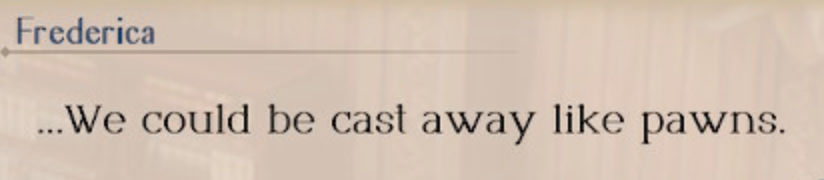
In September 2025 (just a month from Z-A's release), the Pokemon Company cooked up a marketing campaign called "My Friend Malamar" (detailed on Bulbapedia here), which somehow took the internet by storm, seeming to actually influence the online masses and forced them (in-character) into thinking that (base) Malamar was their friend, leading up to a set of videos in the format of in-universe news footage revealing that Mega Malamar was rewriting peoples' personalities in Lumiose City to become artificial followers who can only think about Malamar at any given moment, paralleling the real life Malamar marketing campaign. Again, there is no explained motive, but the Legends Z-A website entries claim that Mega Malamar is intelligent, haughty, and notably difficult to interact with, viewing all others as pawns in its world and even hypnotizing its own trainer if it disagrees with an order. This evokes a lot of supervillain behaviour, but for all its boasting it doesn't really display any feats of intelligence to me, more just brute force and overconfidence while literally dismissing the feelings of others.

By all means, the ZA Marketing Malamar is made out to be the pure essence of power-hungry evil in the Pokemon world with nothing from its perspective to sympathize with, and yet people gladly join in its fun and games because I suppose being evil and mind controlled to have no personality is simple enough to play along with, and/or perhaps just to follow along and fit in while everyone else you know seems to be involved in the latest online trend, preying on the fear of missing out. Of all the contentious additions in ZA, Mega Malamar represents the lowest of the low of industry plants to me purely because of all of this unwarranted attention.

At the time I was a major detractor of Mega Malamar on the forums even before the game's release, pointing out that mega evolution had really nothing to do with the plot which could have been performed by base Malamar (and which the real-world marketing highlighted with the fact that everyone was playing along with a trait that base Malamar already had), in contrast to the previous in-universe mega campaigns (Mega Victreebel, Hawlucha) highlighting the bond between trainer and Pokemon to reach new heights or make up for established shortcomings of the base form like showing off in battle. Meanwhile, the concept of Mega Malamar itself requires you to suspend your disbelief and assume that base Malamar, described as having the most hypnotic powers of all Pokemon, is incapable of "rewriting personalities" like Mega Malamar does, but also simultaneously believe that these powers do exist in the world and Mega Malamar is just more capable of them. Conversely if you can believe that Mega Malamar is capable of pulling off the actions in the Z-A marketing campaign in-universe, there's no reason not to believe that base Malamar is incapable of the same thing.

Building on an analogy I made at the time, it's like if they made a marketing campaign all about Machamp having 4 arms and why having 4 arms is so cool, and then they reveal Mega Machamp still having 4 arms but also being vaguely "smarter" and also being able to punch 1000 times in 2 seconds (which is a fact already in base Machamp's pokedex entries so you have to believe that's still impressive or that base Machamp is less capable). And then in the actual games, Machamp having 4 arms doesn't really affect its battle gameplay at all, which is already true but at least you have to respect its beefy Attack stat and unique Dynamic Punches. Unfortunately the gameplay-story inconsistencies just get even worse for Mega Malamar after all the artificial buildup.

When Legends Z-A released, it would turn out that Mega Malamar had notably bad stat allocation which didn't particularly benefit from Z-A's gameplay mechanics, in which it had no ability to take advantage of its former gimmicks, and wasn't represented in a rogue boss battle with unique enemy attack patterns. Even Hypnosis is still just a status move and in Z-A it doesn't even put you to sleep, just makes you drowsy. In fact, Mega Malamar has much less relevance to the plot of Legends Z-A than you would expect (a major character uses one in battle just to reference XY and is not mentioned otherwise), not even being the intended star of any side missions (contrary to the marketing campaign's proposed plot of being a villain causing chaos in the city), and the player can't even look forward to using it in the base game campaign because it has one of the worst availabilities of the newly introduced megas, with its mega stone only obtainable at the very tail end of the main story (and not even given to you for a dramatic story reason like the other endgame mega stones, it's just added to the optional shop with no fanfare in the middle of the endgame story).

To conclude, imagine little Timmy getting Legends Z-A for Halloween or Christmas, maybe with a fresh Switch 2 to boot, hearing about Malamar being such a popular mon online for a few weeks and building up anticipation throughout the entire story and suite of boss battles, only to end up disappointed that Mega Malamar is actually barely in the game. Now I'd say that's a pretty evil thing to do to a kid for no real reason or gain.

tl;dr: Mega Malamar ends up as a fraud in both story and gameplay, especially after its whole successful marketing campaign doubling down on it being a pure evil villain, and yet it actually seemed to influence real life people into believing its contrarian lore with no substance. There may be more terrible characters within fiction, but the uniquely real-life combination of being an industry plant featuring in false advertising (relative to its role in the actual Z-A game) is one of the more evil things a fictional character can successfully cause (while also being relatively in-character and as part of officially promoted media), in my opinion.

EDIT:
The OP has been edited since but for context, this post was based on the original wording and its second rule.
When mentioning characters, you must follow these rules:

-All characters mentioned would require justification for answer.

-Character had to have done that action because they felt like it-no other motive. Just that they woke up today and chose murder or something.
EX: Thanos cannot be mentioned as he did these actions to combat against over population---which he witnessed first hand on his home planet.
 
Last edited:
Until 2/12/26, voting for Xykon, Edelgard, Pre-release Marketing Mega Malamar, The Roselle and any mentioned villains during said voting period.
You are required to argue for all/10 of the mentioned characters positions. You are only required to put placement numbers.
Placeholder name is Evil McEvilFace.

#1: Evil McEvilFace
#2: Evil McEvilFace
#3: Evil McEvilFace
#4: Evil McEvilFace
#5: Evil McEvilFace
#6: Evil McEvilFace
#7: Evil McEvilFace
#8: Evil McEvilFace
#9: Evil McEvilFace
#10: Evil McEvilFace

Honorable Mentions:
 
Last edited:
The Hypocritic Judge of Paris, Judge Claude Frollo

In the opening act of the Disney adaptation of the novel, "The Hunchback Of Notre Dame," Claude, whom is the justice minister, kills Quasimodo's mother on the steps of Notre Dame. Frollo, who mistook the sack she was carrying for stolen goods, finds a deformed baby. He looks around for the nearest well, and prepares to drop Quasimodo into the well when the Archdeacon finds Frollo, scolds him for the blatant murder, and demands he keeps the baby to appease to God. He does what the Archdeacon says, but casts him to the Bell Tower. Frollo is so racist, he kills thousands of Romani over the span of 20 years. He meets Esmerelda, a Romani dancer, at the Festival of Fools, and he immediately wants her as his own. That night, he prays to Maria to spare him from Hell for his sinful temptations during his villain song, Hellfire. He tells Maria of an ultimatum he plans to give to Esmerelda, be his, or die. He is told of Esmerelda's escape from the cathedral (He was hunting her before she claimed sanctuary in Notre Dame) and prays to God to spare Esmerelda from what he plans to do to her. He wakes up and orders for a manhunt for her. And he burns down houses of people he suspects are harboring her, before capturing her in the Court of Miracles. He asks the ultimatum and she rejects. He ties her to a pole and sets the hay below her ablaze. He fails to kill her. After successfully invading the cathedral and failing to backstab Quasimodo, he hops on top of a gargoyle, which can't support his weight, and falls into the fiery storm below the Bell Tower.
 
Back
Top