• Follow our Instagram!
  • Curious about what we're currently doing about bots? Check out the latest updates from staff in this thread.

Featured VGC 101 #2 - Win Conditions (Article by Slow Homie)

Status
Not open for further replies.

Radio Free C-Side

is a Member of Senior Staffis a Top Community Contributoris a Metagame Resource Contributor
VGC Leader
Article by Slow Homie, posted by me for bbcode and editing purposes.

Smogon VGC 101 - Win Conditions
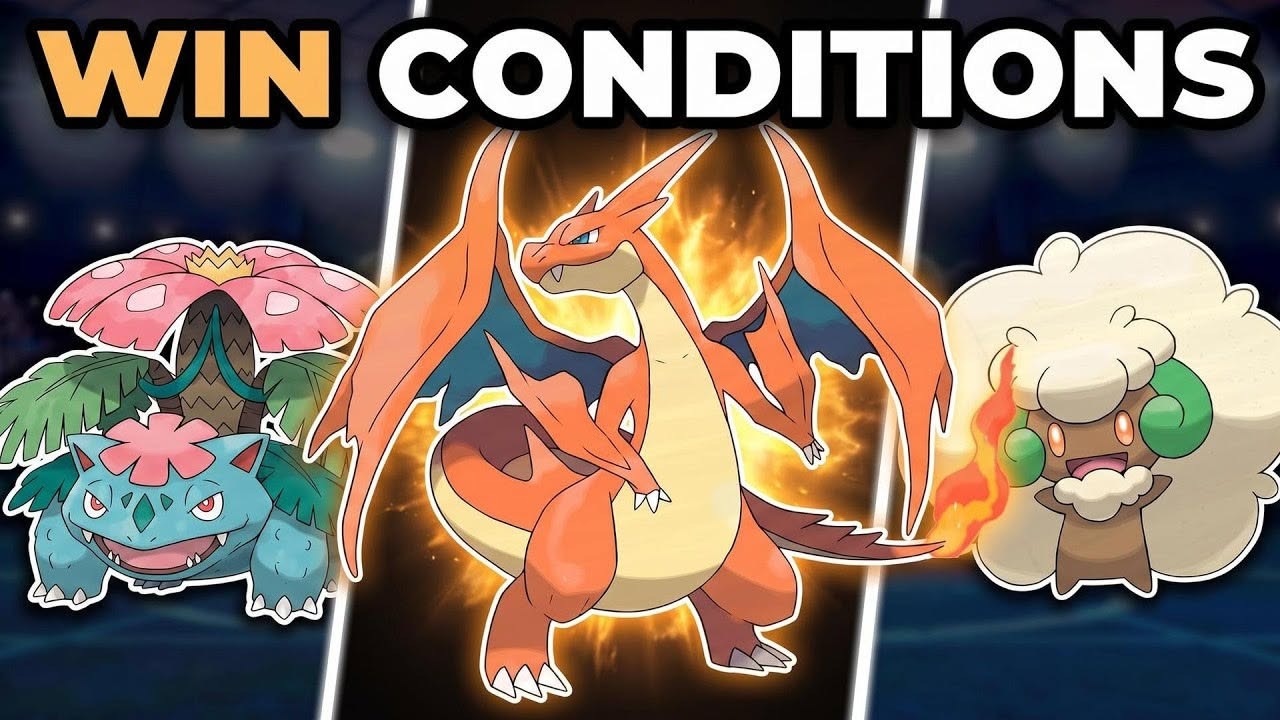
1788624443933.jpeg

In Avengers Infinity War Dr. Strange saw 14,000,000 futures and only one where the heroes defeated Thanos. What he saw was so important that he was willing to give the Time Stone to Thanos in a deal to spare Iron Man’s life. Spoiler alert for Avengers Endgame if you haven’t seen it – but Tony Stark was able to invent time travel, defeat Thanos and save the universe! This is an example of what we call a “Win Condition”. (Sorry for spoiling a movie that is over 7 years old).

Welcome back to VGC 101! The series is specially designed to take you from beginner to competing with and beating the best of the best! I’m SlowHomie and today we are going to talk about win conditions!

When you understand and apply what a win conditon is, you will find yourself holding on to your victories more instead of throwing away leads. You will find yourself winning difficult and impossible games! Your play will be more effective and focused and you will make less mistakes because understanding your win condition allows you to make plays that help you win the game - and not just a turn. Today we will help you understand:

  • What a is a Win Condition
  • Why Win Conditions are Important
  • Identifying Your Win Conditions
  • Identifying Your Opponent’s Conditions
  • Managing Win Conditions

What Is a Win Condition
A win condition is a condition that will win you the game. That may seem a bit obvious but it’s true! Let’s try illustrating it a bit more with a couple examples. If I get my Choice Specs Eruption in while Trick Room is active - I should win. If I poison all of their Pokemon and then bring in my bulky leftovers Dondozo - I should win. If their last mon is choice locked into an electric attack and my last Pokemon is a ground type - I will win.

So here we see a win condition is usually a combination of having one or more of your Pokemon positioned to handle the remaining Pokemon the opponents have. All Pokemon have strengths and weaknesses - so if you can support your strengths and eliminate the opponents' way of handling your weaknesses, you should be in a good spot to win the game.

Sometimes these conditions can be simple - if I remove their X my Y should win. Other times they might involve weakening a Pokemon by lowering their stats or doing damage to them before one of your mons comes in. Oftentimes a win condition involves getting a Pokemon in a certain field condition with the right weather, terrain, or speed control. But for now, the main point to remember is - a win condition is a combination of events that puts you in a position to win the game.

Why Win Conditions are Important
Win conditions are really important because they guide our play. Ultimately we’re always playing to the same win condition - KO the opponent's Pokemon before they can KO yours. But there are lots of ways to get there. And oftentimes we will get careless and lose a win condition early.

For example, if you really need your Incineroar to handle the opposing Calyrex-Shadow, but you let it get KOd early in the game, you might lose even if you get an early game advantage. I have won games from down 1-4 because that last mon was my win condition and I set it up well, and I’ve lost games from up 4-1, because I let my opponent set up their win condition. If you are mindful about your win condition - and your opponents win conditions - you will be less likely to make mistakes or get baited into making plays that give you a short term advantage but ultimately lose you the game (we might call this a “bad trade”).


Identifying Your Win Conditions
There are lots of possible win conditions but we can typically categorize them into two types:
Offensive win conditions: This mon can KO all of their mons once you deal with X.
Defensive win conditions: After I deal with Y, they basically can’t touch my Z.

The next step to go to identifying your win conditions is to know your team. How does it win the game? Most teams will have a combination of offensive mons and support mons. Typically support mons themselves aren’ win conditions - but rather the pieces you use to set up their win conditions. For example, you can use redirection to set up a defensive win condition or protect an offensive win condition. Sometimes you might have a support mon that can win a game by itself such as an Encore Disable Scream Tail or a really bulky Amoonguss. But for most teams you will have 2-3 offensive win conditions.

Identifying Your Opponent’s Conditions
During team preview you should try to identify your opponents' win conditions. What are their key offensive pieces? Or do they have a defense heavy stall win condition? You should also try and identify what they have that looks good into your team. Chances are they will focus on whatever mon does best into your team as their win condition. Also try and notice what you have on your team that’s really good into them. That might help you identify your best win conditions as well.

Managing Win Conditions
So if you’ve identified both you and your opponents’ win conditions - how do you manage that information in the battle? I would say that there are 4 main things to keep in mind:
  1. Protecting your win condition
  2. Breaking/Clearing for your win condition
  3. Preventing your opponent from setting up their win condition
  4. Your win conditions ~may shift~ during a battle

Protecting your win condition: You can do this with redirection, fake out, smart protects, and taking key KOs. It’s also important to do that by knowing when you need to switch it out or save it for later in the game. Don’t be too reckless with your win conditions. Protect them. If a mon has already done its job toward setting up your win condition, don’t be afraid to let it go down for a free switch. Know which pieces can be sacrificed when, and protect the pieces that need protecting

Breaking/clearing for your win condition: If your win condition is a strong electric type attacker, you’re going to want to take care of the opponent’s ground type Pokemon. Many teams will combine complimentary offensive Pokemon to “Break” for each other. For example an ice type can “break” the ground type to let your electric type clean up. You can also use an offensive threat to eliminate an opponent’s offensive threats to set up your defensive win condition.

Most teams will combine both offensive and defensive tools, sometimes you use offense to clear the way for defense, or defense to position offense. Heck sometimes you’ll use offense to position offense or defense to balance defense. But generally you will want a mix of options.

Preventing your opponent from setting up their win condition: They’ve got a game plan they’re trying to execute as well. So don’t let them! This can include disruption like taunt or fake out, using defensive tools like protect and switching to stall out their offense, or offensive tools to remove their win condition. Sometimes removing the opponents win condition is enough for you to just win

Your Win Conditions can Change
I know I’ve spent a lot of time talking about protecting and focusing on your win condition, but it’s important to also be open to your win condition changing as the game goes by.

Based off of what your opponent brings and how they play, you might realize that one of your two or three win conditions is a lot better than the others

Let’s say you’re trying to set up your fire Pokémon to sweep the opponent, but they don’t bring their grass types, they bring their water types. Now you realize your own grass type is a better win condition to play to.

Some play styles like balance are designed to be flexible and have multiple win conditions that can develop throughout a game. Some teams like hard trick room have a lot clearer win conditions, (Set Up TR and bring in your best sweeper), some players like having more flexibility and others like a more clear goal and they choose teams that align with those styles. But no matter what team you play, it’s important to identify your win condition, protect it, and be ready to adapt mid game if the situations arise

VGC 101 Win Condition Video!


To help illustrate these points make sure to check out our video! We were lucky enough to have Pokemon YouTuber and Streamer CBAD break down how he thinks about team Win Conditions! Make sure to give it a watch and subscribe to both CBAD and SnoozeVGC!

Homework
Today’s homework is to: play 3-5 sets and at the start of each game ask yourself “what are 1-2 win conditions I want to play toward?” and “what win condition might my opponent play towards?” At the end of each game go back and ask yourself - “did I do a good job protecting my win condition?”


Review
In conclusion, identifying win conditions helps you focus your play and win more games! With some purposeful practice, I think you’ll find it helps you hold onto your leads better and come from behind when things get off to a rough start. So hopefully we’ve helped you understand win conditions enough that you can continue to grow as you practice!
 

Attachments

  • 1788624443939.jpeg
    1788624443939.jpeg
    185 KB · Views: 26
Last edited:
Translated by boy~, proofread by MahouMila

Em Vingadores: Guerra Infinita, o Doutor Estranho viu 14.000.000 de futuros possíveis e apenas um em que os heróis derrotavam Thanos. O que ele viu era tão importante que ele estava disposto a entregar a Joia do Tempo para Thanos em troca de poupar a vida do Homem de Ferro. Alerta de spoiler para Vingadores: Ultimato caso você ainda não tenha assistido — Tony Stark conseguiu inventar viagem no tempo, derrotar Thanos e salvar o universo! Esse é um exemplo do que chamamos de “Condição de Vitória”. (Desculpem pelo spoiler de um filme que já tem mais de 7 anos.)

Bem-vindo de volta ao VGC 101! A série foi especialmente criada para levar você do nível iniciante até competir e vencer os melhores dos melhores! Eu sou SlowHomie e hoje vamos falar sobre Condições de Vitória!
Quando você entende e aplica o conceito de condição de vitória, vai perceber que consegue manter suas vantagens por mais tempo em vez de desperdiçar uma liderança. Você vai se encontrar vencendo partidas difíceis e até aparentemente impossíveis! Seu jogo será mais eficiente e focado, e você cometerá menos erros, porque entender sua condição de vitória permite que você faça jogadas que ajudam a vencer a partida, e não apenas a vencer um turno. Hoje vamos ajudar você a entender:
● O que é uma Condição de Vitória
● Por que Condições de Vitória são importantes
● Identificando suas Condições de Vitória
● Identificando as Condições de Vitória do seu adversário
● Gerenciando Condições de Vitória

O que é uma Condição de Vitória

Uma condição de vitória é uma condição que fará você vencer a partida. Pode parecer um pouco óbvio, mas é verdade! Vamos tentar ilustrar isso um pouco melhor com alguns exemplos. Se eu conseguir usar Eruption de Choice Specs enquanto o Trick Room estiver ativo — eu devo vencer. Se eu envenenar todos os Pokémon adversários e depois colocar meu Dondozo tank de Leftovers em campo — eu devo vencer. Se o último Pokémon adversário estiver preso em um golpe elétrico por causa de um item de Choice e meu último Pokémon for do tipo Terra — eu vou vencer.

Aqui podemos ver que uma condição de vitória normalmente é uma combinação de ter um ou mais dos seus Pokémon posicionados para lidar com os Pokémon restantes do adversário. Todos os Pokémon têm pontos fortes e fracos — então, se você conseguir fortalecer seus pontos fortes e eliminar as formas que o adversário tem de explorar suas fraquezas, você estará em uma boa posição para vencer a partida.
Às vezes, essas condições podem ser simples: se eu remover o X do meu adversário, meu Y deve vencer. Outras vezes, elas podem envolver enfraquecer um Pokémon reduzindo seus atributos ou causando dano antes que um dos seus Pokémon entre em campo. Muitas vezes, uma condição de vitória envolve colocar um Pokémon em uma determinada situação de campo correta, como clima, terreno ou controle de velocidade. Mas, por enquanto, o principal ponto a lembrar é: uma condição de vitória é uma combinação de acontecimentos que coloca você em uma posição para vencer a partida.

Por que as Condições de Vitória são importantes

Condições de vitória são realmente importantes porque elas orientam nossas jogadas. No fim das contas, estamos sempre jogando em direção à mesma condição de vitória: derrotar os Pokémon do adversário antes que ele consiga derrotar os seus. Mas existem várias maneiras de chegar lá. E muitas vezes ficamos descuidados e perdemos uma condição de vitória cedo demais.

Por exemplo, se você realmente precisa que seu Incineroar lide com o Calyrex-Shadow adversário, mas permite que ele seja derrotado logo no início da partida, você pode perder mesmo tendo conseguido uma vantagem no começo. Já ganhei partidas em que estava perdendo por 1-4, porque aquele último Pokémon era minha condição de vitória e eu consegui prepará-la bem. Também já perdi partidas em que estava vencendo por 4-1, porque deixei meu adversário preparar a condição de vitória dele. Se você estiver atento à sua condição de vitória — e às condições de vitória do seu adversário — será menos provável que cometa erros ou caia em armadilhas fazendo jogadas que dão uma vantagem de curto prazo, mas que acabam fazendo você perder a partida. Podemos chamar isso de uma “troca ruim”.

Identificando suas Condições de Vitória

Existem muitas condições de vitória possíveis, mas normalmente podemos categorizá-las em dois tipos:
Condições de vitória ofensivas: Este Pokémon pode derrotar todos os Pokémon adversários depois que eu lidar com X.
Condições de vitória defensivas: Depois que eu lidar com Y, o adversário basicamente não consegue causar dano relevante ao meu Z.

O próximo passo para identificar suas condições de vitória é conhecer o seu próprio time. Como ele vence a partida? A maioria dos times terá uma combinação de Pokémon ofensivos e Pokémon de suporte. Normalmente, os Pokémon de suporte não são, por si só, condições de vitória — eles são as peças que você usa para preparar suas condições de vitória. Por exemplo, você pode usar redirecionamento para preparar uma condição de vitória defensiva ou proteger uma condição de vitória ofensiva. Às vezes, você pode ter um Pokémon de suporte que consegue vencer uma partida sozinho, como um Scream Tail com Encore + Disable ou um Amoonguss extremamente tank. Mas, na maioria dos times, você terá 2-3 condições de vitória ofensivas.

Identificando as Condições de Vitória do seu Adversário

Durante a Visualização de Equipe, você deve tentar identificar as condições de vitória do seu adversário. Quais são as principais peças ofensivas dele? Ou será que ele possui uma condição de vitória defensiva baseada em stall? Você também deve tentar identificar quais Pokémon do adversário parecem ser bons contra o seu time. É provável que ele foque naquele Pokémon que tem o melhor desempenho contra o seu time como sua condição de vitória. Também tente perceber quais Pokémon do seu time são especialmente bons contra o time adversário. Isso pode ajudar você a identificar quais são suas melhores condições de vitória.

Gerenciando Condições de Vitória

Então, depois de identificar as suas condições de vitória e as do adversário, como você utiliza essas informações durante a batalha? Eu diria que existem 4 pontos principais para manter em mente:
1. Proteger sua condição de vitória
2. Abrir caminho/Limpar para sua condição de vitória
3. Impedir que seu adversário prepare a condição de vitória dele
4. Suas condições de vitória ~podem mudar~ durante a batalha

Protegendo sua condição de vitória: Você pode fazer isso usando redirecionamento, Fake Out, Protects inteligentes e nocauteando Pokémons chave. Também é importante fazer isso sabendo quando você precisa trocar seu Pokémon ou guardá-lo para mais tarde na partida. Não seja imprudente com suas condições de vitória. Proteja-as. Se um Pokémon já cumpriu sua função na preparação da sua condição de vitória, não tenha medo de deixá-lo ser derrotado para conseguir uma troca livre. Saiba quais peças podem ser sacrificadas em cada momento e proteja as peças que precisam ser protegidas.

Abrindo caminho/Limpando para sua condição de vitória: Se sua condição de vitória é um poderoso atacante do tipo Elétrico, você terá que lidar com os Pokémon do tipo Terra do adversário antes disso. Muitos times combinam Pokémon ofensivos complementares para “abrir caminho” uns para os outros. Por exemplo, um Pokémon do tipo Gelo pode lidar com o Pokémon do tipo Terra para permitir que seu Pokémon Elétrico finalize a partida. Você também pode usar uma ameaça ofensiva para eliminar as ameaças ofensivas do adversário e preparar sua condição de vitória defensiva.

A maioria dos times combina ferramentas ofensivas e defensivas. Às vezes você usa uma ofensiva para abrir caminho para a defesa, ou defesa para posicionar sua ofensiva. Aliás, às vezes você usa uma ofensiva para posicionar outra ofensiva, ou uma defensiva para equilibrar sua defesa. Mas, de modo geral, você vai querer ter uma mistura de opções.

Impedindo que seu adversário prepare a condição de vitória dele: Seu adversário também tem um plano de jogo que está tentando executar. Então não deixe que ele faça isso! Isso pode incluir ferramentas de interrupção como Taunt ou Fake Out, ferramentas defensivas como Protect e trocas para prolongar a partida e desgastar a ofensiva adversária, ou ferramentas ofensivas para eliminar a condição de vitória dele. Às vezes, eliminar a condição de vitória do adversário já é suficiente para você simplesmente vencer a partida.

Suas Condições de Vitória podem mudar

Eu sei que passei bastante tempo falando sobre proteger e focar na sua condição de vitória, mas também é importante estar aberto à possibilidade de sua condição de vitória mudar conforme a partida avança.
Dependendo do que seu adversário traz e de como ele joga, você pode perceber que uma das suas duas ou três condições de vitória é muito melhor que as outras.

Digamos que você esteja tentando preparar seu Pokémon do tipo Fogo para varrer o time adversário, mas ele não trouxe os Pokémon do tipo Planta — em vez disso, trouxe os Pokémon do tipo Água.

Agora você percebe que seu próprio Pokémon do tipo Planta é uma condição de vitória muito melhor para planejar suas jogadas.
Alguns estilos de jogo, como Balanceado, são projetados para serem flexíveis e terem múltiplas condições de vitória que podem se desenvolver ao longo da partida. Alguns times, como Trick Room dedicado, possuem condições de vitória muito mais claras (preparar o Trick Room e colocar seu melhor varredor em campo), e alguns jogadores gostam de ter mais flexibilidade, enquanto outros preferem ter um objetivo mais claro e escolhem times que combinam com esses estilos. Mas, independentemente do time que você jogar, é importante identificar sua condição de vitória, protegê-la e estar preparado para se adaptar durante a partida caso a situação exija.

Vídeo sobre Condições de Vitória do VGC 101!


Para ajudar a ilustrar esses pontos, não deixe de conferir nosso vídeo! Tivemos a sorte de contar com o YouTuber e streamer de Pokémon CBAD para explicar como ele pensa sobre as Condições de Vitória de um time! Não deixe de assistir e se inscrever nos canais do CBAD e do SnoozeVGC!

Lição de Casa

A tarefa de hoje é jogar de 3 a 5 partidas e, no início de cada uma, perguntar a si mesmo “quais são as uma ou duas condições de vitória que eu quero focar meu jogo?” e “qual condição de vitória meu adversário pode tentar alcançar?”. No final de cada partida, volte e pergunte a si mesmo “eu fiz um bom trabalho protegendo minha condição de vitória?”

Revisão

Em conclusão, identificar as condições de vitória ajuda você a manter o foco nas suas jogadas e a vencer mais partidas! Com um pouco de prática intencional, acredito que você perceberá que isso ajuda a manter suas vantagens por mais tempo e a virar partidas que começam de forma desfavorável. Esperamos ter ajudado você a entender as condições de vitória o suficiente para que possa continuar evoluindo enquanto você pratica!
 
Translated by Val16, proofread by xmarsh

Nel film Avengers Infinity War Dr. Strange ha visto 14,000,000 futuri, e solo uno era quello in cui gli eroi sconfiggevano Thanos. Ciò che vide fu così importante che fu disposto a cedere la gemma del tempo a Thanos in cambio della vita di Iron Man.
Allerta spoiler per Avengers Endgame se non lo avete visto - ma Tony Stark è riuscito a inventare il viaggio nel tempo, a sconfiggere Thanos e a salvare l'universo! Questo è un esempio di ciò che chiamiamo "Win Condition" (Perdonate lo spoiler ma è comunque un film vecchio di
7 anni).

Bentornati a VGC 101! La serie pensata per portarti da principiante a competere e sconfiggere i migliori giocatori! Io sono SlowHomie e oggi parleremo delle Win Condition!

Quando riuscirai a capire e ad applicare quella che è una Win Condition, ti renderai conto che sarai in grado di ottenere più vittorie anzichè sprecare il tuo vantaggio. Ti ritroverai a vincere partite difficili o persino impossibili!
Le tue giocate saranno più efficaci e ragionate, e commetterai meno errori perchè capire la tua Win Condition ti permette di fare delle giocate che ti aiutano a vincere la partita - non solo un singolo turno. Oggi ti aiuteremo a capire:

- Cosa è una Win Condition
- Perché le Win Condition sono importanti
- Identificare la tua Win Condition
- Identificare la Win Condition del tuo avversario
- Gestire le Win Condition

Cosa è una Win Condition
Una Win Condition è una condizione che ti permette di vincere una partita. Sembra abbastanza ovvio ma è vero! Proviamo a spiegarlo meglio con un paio di esempi.
Se riesco a cliccare Eruption Choice Specs mente la Trick Room è attiva - dovrei aver vinto. Se avveleno tutti i pokemon del mio avversario e poi riesco ad entrare in campo con il mio Dondozo bulky e con i Leftovers - dovrei aver vinto.
Se l'ultimo Pokémon del mio avversario è lockato su una mossa elettro a causa di un Choice Item, e il mio ultimo Pokémon è di tipo terra - vinco.

Quindi qui vediamo che una Win Condition solitamente è il risultato dell'avere uno o più Pokémon posizionati in modo che possano vincere contro i Pokémon che sono rimasti al tuo avversario.
Tutti i Pokémon hanno dei punti di forza e debolezza - quindi se riesci ad aiutare questi punti di forza così da poter eliminare i modi in cui il tuo avversario può sfruttare le tue debolezze, dovresti essere posizionato bene per vincere.

A volte le Win Condition sono molto semplici - se rimuovo la loro X allora la mia Y dovrebbe riuscire a vincere. Altre volte potrebbe voler dire indebolire un Pokémon abbassando le sue statistiche o facendogli dei danni prima che uno dei tuoi Pokémon entri in campo.
Altre volte una Win Condition riguarda il posizionare un Pokémon in una certa condizione presente in campo, per esempio il giusto weather, terreno, o speed control, Ma al momento il punto focale è il seguente - una Win Condition è una combinazione di eventi che ti mette nella
posizione di poter vincere una partita.

Perché le Win Condition sono importanti
Le Win Condition sono molto importanti perchè guidano le nostre giocate. Fondamentalmente giochiamo tutti per la stessa Win Condition - mandare KO i Pokémon del nostro avversario prima che mandino KO i nostri. Ma esistono molti modi per poterla raggiungere.
E spesso siamo imprudenti e perdiamo una Win Condition troppo presto.

Per esempio, se hai davvero bisogno di Incineroar per gestire il Calyrex-Shadow del tuo avversario, ma viene mandato KO troppo presto, potresti perdere anche se avevi un vantaggio in early game. Ho vinto situazioni di 1 contro 4 perché quell'ultimo Pokémon era la mia Win Condition
e sono riuscito a potenziarlo bene, e ho perso delle partite da una situazione di 4 contro 1 perché ho permesso al mio avversario di potenziare la sua Win Condition. Se sei consapevole della tua Win Condition - e di quelle del tuo avversario - avrai meno probabilità
di compiere errori o di farti ingannare a fare giocate che ti danno un vantaggio nel breve termine ma che alla fine ti fanno perdere la partita (potremmo chiamare questa cosa un "bad trade").

Identificare la tua Win Condition
Esistono molte Win Condition possibili, ma vengono solitamente catalogate in due tipi:
Win Condition offensive: Questo Pokémon può mandare KO tutti i Pokémon del tuo avversario una volta che ti occupi di X.
Win Condition difensive: Dopo essermi occupato di Y, il mio avversario non riesce a toccare il mio Z.

Il prossimo passo da fare per identificare la tua Win Condition è conoscere il tuo team. Come fa a vincere una partita? La maggior parte dei team è composta da una combinazione di Pokémon offensivi e Pokémon di supporto.
Solitamente i Pokémon di supporto in sé non sono una Win Condition - ma sono delle pedine che utilizzi per raggiungere le Win Condition. Per esempio, puoi utilizzare una redirection per impostare una Win Condition difensiva o per proteggere una WIn Condition offensiva.
A volte potresti avere un Pokémon di supporto che può vincere una partita da solo come ad esempio Scream Tail con Encore e Disable o un Amoonguss molto bulky. Tuttavia nella maggior parte dei team avrai 2-3 Win Condition offensive.

Identificare la Win Condition del tuo avversario
Durante la team preview dovresti provare ad identificare le Win Condition del tuo avversario. Quali sono i suoi Pokémon offensivi principali? Oppure hanno una Win Condition difensica basata su una strategia di stall? Dovresti anche provare ad identificare
tra i Pokémon del tuo avversario quali sono i migliori da portare contro il tuo team. È probabile che il tuo avversario utilizzi come Win Condition qualunque Pokémon sia il più efficace contro il tuo team.
Cerca anche di capire quale dei Pokémon del tuo team è più forte contro il team avversario. Questo potrebbe aiutarti a identificare le tue migliori Win Condition.

Gestire le Win Condition
Hai identificato sia le Win Condition tue che quelle del tuo avversario - come gestisci queste informazioni durante la partita? Direi che ci sono 4 aspetti principali da tenere a mente:

1. Proteggere la tua Win Condition
2. Creare lo spazio per la tua Win Condition
3. Impedire al tuo avversario di impostare la sua Win Condition
4. Le tue Win Condition ~potrebbero cambiare~ durante la partita

Proteggere la tua Win Condtion: Puoi fare questa cosa tramite l'uso della redirection, Fake Out, Protect intelligenti, e mettendo a segno dei KO cruciali. È inoltre molto importante farlo sapendo quando hai bisogno di switcharla via oppure conservarla per un momento più avanzato della partita. Non essere troppo spericolato con le tue Win Condition. Proteggile. Se un Pokémon ha già fatto il suo lavoro per impostare la tua Win Condition, non farti troppi problemi nel farlo andare KO per avere un free switch. Devi sapere quali sono i Pokémon che puoi sacrificare, e quando puoi permetterti di sacrificarli, e proteggi i Pokémon che hanno bisogno di essere protettti.

Creare lo spazio per la tua Win Condition: Se la tua Win Condition è un forte attaccante di tipo elettro, allora vorrai gestire i Pokémon di tipo terra del tuo avversario. Molti team combinano Pokémon offensivi complementari per aiutarsi a vicenda. Per esempio un Pokémon di tipo ghiaccio può mandare KO il Pokémon di tipo terra del tuo avversario così che il tuo Pokémon di tipo elettro possa pulire il resto. Puoi anche utilizzare un Pokémon offensivo per eliminare un Pokémon offensivo del tuo avversario per per poter impostare la tua Win Condition difensiva.

Molti team combinano sia strumenti offensivi che difensivi, a volte si usano quelli offensivi per creare spazio per quelli difensivi, oppure si utilizzano quelli difensivi per posizionare quelli offensivi. Anzi a volte si usano i Pokémon offensivi per posizionare altri Pokémon offensivi, o i Pokémon difensivi per posizionare i Pokémon difensivi. Ma generalmente è preferibile avere un mix di opzioni.

Impedire al tuoi avversari di impostare la loro Win Condition: Anche loro hanno un game plan che stanno cercando di mettere in atto. Quindi non permetterglielo! Questo può includere mosse di disturbo come Taunt o Fake Out, l'uso di mosse difensive come Protect oppure switchare via per rallentare l'offensiva avversaria, oppure Pokémon offensivi per rimuovere le loro Win Condition. A volte rimuovere la Win Condition avversaria è abbastanza per vincere.

Le tue Win Condition possono cambiare
So di aver speso molto tempo a parlare di concentrarti sulla Win Condition e di proteggerla, ma è anche importante essere aperti alla possibilità che la Win Condition cambi nel corso della partita.

In base a ciò che porta il tuo avversario e come gioca, potresti renderti conto che una delle tue due o tre Win Condition è decisamente migliore delle altre.

Ipotizziamo che tu stia cercando di mettere i tuoi Pokémon fuoco nella condizione di poter sweepare il tuo avversario, ma lui non porta Pokémon di tipo erba, bensì Pokémon di tipo acqua. A questo punto capisci che portare i tuoi Pokémon di tipo erba è una Win Condition migliore.

Alcuni stili di gioco come quelli balance sono progettati per essere flessibili e avere multiple Win Condition che possono svilupparsi nel corso della partita. Alcuni team come gli Hard Trick Room hanno delle Win Condition più chiare (Mettere la Trick Room e mettere dentro il tuo sweeper migliore), alcuni giocatori preferiscono avere maggiore flessibilità mentre altri preferiscono avere un obiettivo preciso e scelgono dei team che si adattano a questi stili. Ma a prescindere da team che utilizzi, è importante identificare la tua Win Condition e proteggerla ed essere pronto durante la partita se la situazione cambia.

VGC 101 Win Condition Video!


Per illustrare meglio questi punti, non perdetevi il nostro video! Abbiamo avuto la fortuna di ospitare CBAD, YouTuber e Streamer di Pokémon, che ci ha spiegato il suo punto di vista sulle Win Condition di una squadra!
Guardatelo e iscrivetevi sia al canale di CBAD che a quello di SnoozeVGC

Compiti
I compiti di oggi sono: gioca 3-5 partite e prima del loro inizio chiediti "quali sono le mie Win Condition" e "Quali sono le Win Condition del mio avversario?" alla fine di ogni partita devi chiederti -"ho fatto un buon lavoro per proteggere la mia Win Condition?"

Riepilogo
In conclusione, identificare la Win Condition ti aiuta a concertarti sulle giocate e a ottenere più vittorie! Con un po' di pratica, credo che scoprirai che ti aiuterà meglio a gestire il vantaggio e a recuperare partenze difficili.
Spero quindi di averti aiutato a comprendere le Win Condition abbastanza da poterti permettere di continuare a migliorare con la pratica!
 
Status
Not open for further replies.
Back
Top