Speed in Draft: An Examination of Draft's Most Important Stat
| « Previous Article | Next Article » |
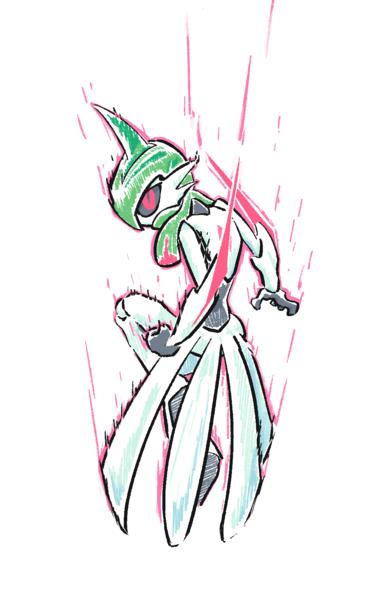
Art by Pissog.
Intro
There are many things that make the Draft formats unique from standard ladder formats, but perhaps one of the largest differences can be mostly overlooked or forgotten. Speed is perhaps the most important stat in competitive Pokémon, dictating the ordering within turns and impacting a Pokémon's viability with a single number.
However, in Draft, Speed plays several additional roles, which place it on an incredible pedestal compared to any other stat or even most objective categorizable features of an individual Pokémon or team. The nature of Draft as a prep-first format means anyone not respecting Speed or providing it the proper attention will be left in the dust.

What Makes Draft Speed Different

In your standard non-Draft format, you're facing a wide range of potential opponents. Whether you're in a ladder format where you could be facing a Seasonal winner immediately followed by someone who thinks Ash Ketchum built a sample team, or you're matched up against a tournament team that only needs to win one game of a best-of-three with a year's worth of scouting behind it, you cannot be assured of what you'll see. Perhaps the ladder is spamming Dragonite, or the metagame mandates Primal Groudon or Snorlax in all but policy; you've still got no certainty what Pokémon will show up, or what won’t.
This could not be further from the truth in Draft. While it is true that every match will be facing different opponents and different Pokémon, for a specific match, you and your opponent have only so many Pokémon you need to worry about. Depending on the matchup and size of the draft rosters, you can often even narrow down what your opponent can bring, eliminating subpar options and mandating certain ones. Whether your opponent has a roster of twelve middling but legitimate picks or just six good Pokémon and two throwaways with a BST total less than a fully evolved starter, you know the full range of what is possible.
With this incredible narrowing of options, it is remarkably easy to put together a list of base Speed tiers and their in-game numbers to ensure a much tighter spread of what is even possible within your or your opponent's team. Preparing for a Draft match without a look at these Speed tiers will result in inadequate preparation and flying blind. Winning in such a manner is not impossible, but failure to prepare is only detrimental to your chance of success. Speed is so important that all mainstream preparation documents will either sort rosters by base Speed or will provide an option to change to do so.
As such, Speed as a stat plays a vital role in both drafting and match preparation, and it can make or break a draft even before a tournament round or season schedule has been released. There are no unwinnable Draft matchups, but if you fail to account for Speed when building your draft or preparing in the teambuilder, you're certain to come in last in the race. This accounts for both drafting itself and match preparation.
Lacking proper threats at key Speed tiers can result in many EVs being put into defensive stats, disrupting damage calculations. While this can sound minor, Draft preparation will almost always include ensuring that a Pokémon can survive a hit with .3% of its health, or a move can never 2HKO it with entry hazards up, and these calculations and predictions are often what separate a mediocre player from someone with potential. Allowing every opponent that opportunity to move free Speed EVs into defensive stats will make every game far more difficult than it needs to be.

Good and Bad Speed Choices

Selecting your roster in Draft is far more complex than a numbers game, but there are useful guidelines that one can be aware of when making both short- and long-term decisions during drafting to ensure Speed can work for you, rather than against you. While most of these examples and numbers will be based on the standard SV format, they hold true to most other Draft formats, though with some adjustments necessary to make them fit better for the format.
Different formats can have different ranges of important Speed stats, depending on the generation and limitations. The earlier a generation, for example, the fewer Pokémon have incredibly inflated Speed stats while also being prime offensive threats—for example, in Draft's origins during the ORAS generation, one of the biggest threats you needed to be sure your Pokémon were outspeeding was the base 100 Speed Mega Gardevoir. In SV, you want to outspeed Iron Valiant somehow, and it's about the slowest you can go with your fastest Pokémon and still come away with a mostly viable team. With base 110 serving as a gut-check center of Speed tiers in SV due to four viable Ogerpon formes, Latias, Latios, and Iron Moth, with threats like Zarude and Walking Wake right behind, it's important to have a meaningful presence at the tier. Additionally, with a massive army of Pokémon at or around base 100 Speed, and threats like Tornadus-T, Greninja, Cinderace, and Roaring Moon around base 120, you'll want to have Pokémon around that Speed to pressure them.
However, not every Pokémon within a Speed bracket is created equal. For example, the base 115 range is pretty heavily packed, with dangerous threats like the aforementioned Iron Valiant, Starmie, and Serperior. However, much less threatening choices, such as Ambipom, Alolan Persian, and Floatzel, are also available. Having a Pokémon at a Speed tier doesn't matter if your opponent isn't going to bother with trying to outspeed it. Sure, it's maybe nice to not get hit by Floatzel's Wave Crash unnecessarily, but without a particularly threatening presence otherwise, it may be worth putting those EVs into defensive stats to take the hit better and also benefit against other Pokémon on Floatzel's team.
Some Pokémon, like Whimsicott or Hawlucha, perform poorly when trying to pressure Speed investment for other reasons, such as abilities that cause them to interact with the turn order differently. Why bother to prepare your Pokémon's EVs for a Hawlucha if it's most likely going to activate Unburden and then double its Speed? On the other hand, a Pokémon's roles may limit its Speed potential. Tentacruel is actively worse if it's running full Speed investment in most games, as it often needs defensive EVs to achieve the longevity it needs to accomplish its goals in the entry hazards war, so it doesn't pack as much of a punch when it comes to controlling Speed investments.
That being said, if a Pokémon packs both offensive presence and a useful Speed tier, then it can serve as a good option. Most of these Pokémon, such as Meowscarada, Latios, and Mew, have plenty of redeeming characteristics that make them worth picking up regardless. With good preparation, you can often find yourself with a solid Speed tier structure to force your opponent to spend their time figuring out what they want to outspeed and what they can justify moving after on any given turn.

The Nature Difference

Having these staggered positions ensures that no matter what Pokémon your opponent has within the magical range, you have a Pokémon close enough to it to pressure it. If your fastest Pokémon below base 110 Speed is the base 95 Kyurem, for example, Ogerpon-W (or anything at base 110) can happily run an offense-boosting nature and still outspeed Kyurem, giving a major boost to its damage output. This is the major reason why you don't want just two Pokémon around the base 115-120 area as your speed control, as your slower Pokémon will lag behind and provide a lot of opportunity for foes to deal boosted damage while still outpacing what they can.
Natures have been in the game since ADV but are perhaps a bit "set it and forget it" in standard ladder formats—if you want your Pokémon to go faster, you pick Jolly or Timid, and if you want damage, you take Adamant or Modest. Defensive natures exist for those that need it, as well, but otherwise, it's a bit of sprinkling on top of a 252-EV investment. Natures boost a stat by 10%, meaning that the largest increases will come from the largest base stat. EVs do play into it, but even a full investment will only be changing the nature increase by a few points. This means that a common angle is to use a Speed-boosting nature but not invest many EVs in Speed—at base 100 Speed, 144 EVs with a positive nature come out to the same number (299) as 252 EVs with a neutral nature, saving over 100 EVs if there's nothing between 299 and 328 to worry about. This does hold true for other stats, and a mark of a good player is often determining where the nature is best placed.
Because the natures increase the raw stat by a percentage, different regions of the Speed tiers will take more or less difference to overtake with natures. As an example, a base 77 with 252 EVs and no boosting nature, such as Heatran, can outspeed a base 65, even if it runs 252 EVs and a boosting nature. This is a difference of 12 points, compared to the 15 up in the base 110 area, like the example in the first paragraph. However, this obviously comes with the caveat that usually Pokémon with lower Speed stats are far more likely to invest in defenses and disregard Speed—while Heatran can often invest some EVs into Speed, most relevant base 65s, such as Orthworm, Alomomola, and Umbreon, are unlikely to be aiming to outspeed Heatran, since they need to invest in defenses.
These are not requirements or hard-and-fast rules, but they're reasons why it is more ideal to avoid having these large gaps in Speed tiers. Suppose the top of your Speed structure are the base 125 Darkrai and Weavile; despite them being powerful offensive threats, if your third fastest Pokémon is a base 100 Salamence, you're leaving out a huge range of Pokémon that do not have any motivation to try to outspeed your base 125s but do not need a ton of investment to outspeed your Salamence. You have three powerful Pokémon, to be sure, but they're prone to struggle because they leave a wide flexibility in Speed investment for opponents to take advantage of.

Alternative Speed Control

As Game Freak has added more and more options into the game, Speed has become less a game about pure numbers as more and more opportunities to manipulate that number have arrived. The default example is the holy grail of speed control, the Choice Scarf, but plenty of other options like Sticky Web, Trick Room, Speed Boost, and Booster Energy exist. You can even rely on priority moves like Palafin's Jet Punch and Dragonite's Extreme Speed or Berries like Salac and Custap for surprise reversals of fate. There are plenty of options depending on the roster and context.
Some of these options are less valuable than others in certain contexts. While Speed Boost may pose a threat to your team during the game, it can often be entirely ignored when assigning Speed EVs, as you can often rely on the Yanmega or Blaziken to be far outpacing your Pokémon after a single turn—why bother EVing a Pokémon to outspeed a Blaziken with 252 Speed EVs at all only to get completely lapped because Blaziken got a free turn before that Pokémon came in?
On the other hand, something like Sticky Web and Booster Energy are far more focused in the preparation phase but are less impactful during the game. Sticky Web is a major game-long threat so long as the setter is not KOed, but well-prepared teams will bring sufficient forms of removal, copious amounts of Heavy-Duty Boots, or both. Booster Energy, on the other hand, will certainly be taken into account during preparation where possible, but in-game, it only ever can come into play once in the majority of cases—enough to make it a threat, but with proper play or a bit of luck, it can be nullified for the most part.
A player's choice of speed control is going to vary. Some players swear by a late-round cheap Sticky Web threat option, plenty enjoy the allure of the Speed-boosting weather abilities, and others are happy to fully commit to a Trick Room playstyle, just to name a few. However, one near-universal expectation is that a team will have some manner of speed control, often multiple. Having a good option or two to pick up the Choice Scarf is going to be a consistent presence on strong drafts. It's important to remember that these options usually circumvent the impact that natures play in speed control; having a slow draft full of prime Choice Scarf users may allow you to outspeed an opposing Pokémon for example, but it will not prevent your opponent from running damage-boosting natures regularly.

Why Base 130+ Doesn’t Matter

In the recent Autumn Seasonal for the Draft Circuit in 2025, where nearly 600 players drafted a team of eight Pokémon each, Jolteon was drafted six times, both Electrode combined for three pickups, and Barraskewda went for a shocking zero total drafts. This is despite the group of them all costing 14 points, half of that being Barraskewda, and players having 90 points to draft eight Pokémon.
The simple truth is that at a certain point, Speed stops mattering. If your fastest Pokémon is a Cyclizar, maybe you try to ensure that the Jolteon can't run Modest, but you're not actually super motivated to even try to outspeed it. If you opt out of trying to outspeed some Jolteon, that can free up a ton of EVs to put in a defensive stat, and Jolteon without Tera can struggle to do anything to Cyclizar anyway. While a cherry-picked duo, this is a consistent story across the many years and formats of Draft; there is an invisible line in the base Speed tiers where going further than that can be detrimental to a Pokémon's ability to pressure a foe.
There is also the uncomfortable truth that Pokémon with blistering Speed are not often going to hit very hard. Electrode has a base 80 Special Attack, Jolteon has a respectable but outclassed base 110 Special Attack, and Barraskewda has a legitimate base 123 Attack but is exploitable for a lack of effective coverage and reliance on rain. Sure, Dragapult and Flutter Mane exist, but those are rightfully removed from almost every Draft league or tournament. There are some exceptions; for example, Dragapult is often available but maximally expensive in formats or structures where rosters can have enough space to get options for dealing with it, but those options are rarely going to be intending to outspeed it via pure statistical Speed.
There is one small exception to the lack of value at especially high Speed stats, and that is against Choice Scarf (or similar +1 equivalent, like Booster Energy) speed control, specifically Deoxys-S and Regieleki, as even going as slow as Electrode means that Choice Scarf users as slow as base 85 are outspeeding it. Deoxys-S is the obvious and perhaps the only one, outspeeding any Choice Scarf Pokémon with base 103 Speed or slower, somewhat invalidating a large amount of options, and often being able to bring coverage options to genuinely threaten those choices. Regieleki exists but is much more limited in this by nature of a much more restrictive movepool, but in some contexts, it can be of use to pressure Choice Scarf users. Until the base 200 Speed region grows more crowded, Deoxys-S and its poor imitation in Regieleki are going to be the only Pokémon that can make use of this distinction.

Building Speed / Speed Creeping

Every point invested into Speed beyond what your Pokémon actually needs is a wasted point that could've gone into another stat. Without fearing the entire range of a ladder-based metagame, you can better manage your Speed EVs to be the most effective. A good preparation document will include a Speed breakdown of both teams, giving you a better visualization of what Pokémon can do and how.
Each Draft game is different, and your goals in one will be different from your goals in another. However, there are evergreen concepts—you will want your Greninja to outspeed their Tornadus-T, you will want your base 100 Pokémon to prevent Garchomp from running Adamant, and there plenty of other possible variations. This is known as Speed creeping—placing exactly enough EVs to outspeed a relevant threat by one point, the minimum amount possible. Greninja only needs 24+ Speed EVs and a positive nature to outspeed a positive-natured Tornadus-T, a tiny saving but a good example of this concept. The larger the base Speed difference, the more EVs you can save by moving down to right above them numerically.
Determining what you need to Speed creep is going to be based on your own team priorities and what you feel comfortable with. You may make the decision that outspeeding only neutral foes is acceptable, or you may want to ensure that you can outspeed even a nature-boosted foe. A particularly fast Pokémon may seek to outspeed a +1 target, such as a slower Scarfer, but this is much less common. You may even choose to disregard an opposing Pokémon altogether, as not every Pokémon can come to a game in Draft, meaning it’s entirely possible to disrespect an option if you believe it won't come. Perhaps it's a legitimate Pokémon that matches up exceptionally poorly into your roster, such as Palafin if you have a Sun-focused structure, or it's a fast but otherwise nonthreatening option, such as Sceptile or Wugtrio.
There are no real rules of thumb here beyond investing to only outspeed by one point, just a mental muscle to practice over the course of seasons and tournaments. Some players will be more aggressive, choosing to disregard Speed-boosting natures more often to squeeze extra points out of their own Pokémon's other stats, while others will play more conservatively and ensure that they can outspeed every possible threat that might reasonably come. The former is colloquially known as greeding, where certain achievable baselines are disregarded to put more EVs into another stat. While this can sometimes backfire, such as when Zapdos is in fact running full Speed and suddenly outspeeds your Ogerpon-W, in other cases the prediction can pay off, allowing your Pokémon to hit harder or take hits easier at no cost of moving second.

Locating The Speed Control

While there are legitimate reasons to not bring a Choice Scarf to a game, lacking one should be a conscious decision. Choice Scarf is far and away the most flexible means of speed control, as it is effective throughout the game and has a limitation that can be worked around with proper play. Nobody wants to load into a game knowing that their Pokémon are always going to move second, and having an opposing Pokémon be entirely faster than your team is not ideal for late-game situations.
Choice Scarf users are not going to be a big focus during the drafting phase, but being aware of what makes for a useful Choice Scarf option can help ensure that you aren't missing a ton of advantages going into your games. You should rarely be selecting Pokémon specifically because they can be a useful Choice Scarf user, but disregarding the option entirely can result in a limited range of choices during preparation, which can be taken advantage of in teambuilding.
Zapdos, for example, can make for a less reliable option, as it often would appreciate having Heavy-Duty Boots, and as a more defensive or utility-focused Pokémon, it prefers the freedom to switch moves without needing to switch out. On the other hand, Darkrai has no innate weakness to entry hazards, its innate power can allow it to mostly disregard being Choice-locked, and its access to Trick can disrupt an opponent's strategy, making it a more usable Choice Scarf option. Landorus-T enjoys the flexibility of accomplishing multiple tasks over the course of a tournament, while Hydreigon appreciates outspeeding more Pokémon and often will be varied game to game only by the coverage it chooses to bring.
Similar to ladder formats, seeing how your opponent plays in-game can help provide insight as to what form of speed control has been brought. Araquanid and Ribombee can accomplish other tasks in theory, but their presence often can confirm an attempt to set up Sticky Web, while Hawlucha or Sneasler alongside Rillaboom is almost certainly going to be taking advantage of Unburden in many games. If Greninja is setting hazards with a Landorus-T on the team, it raises the chance that Landorus-T is the one holding a Choice Scarf. If Gengar is switching into a Meowscarada to revenge kill it, it's clearly telegraphed that your opponent expects the Gengar to outspeed a Meowscarada. This isn't always true, as running double hazards can have its justifications, or the Gengar could be some form of Focus Sash + Destiny Bond or even just attempting to create mind games. Though, as a general rule, if you're not seeking information out of your opponent's choices during a game, you may miss the surprise tech that will deny you your win.

Conclusion

Games are won or lost based on which Pokémon moves first. In most formats, this can often feel like a gamble, investing as much as you can into Speed to ensure your Pokémon's pace against a wide field of threats and hoping on the ladder's "Searching..." phase that you don't run into the arrow for their Achilles' heels. In Draft, Speed becomes an incredibly personalized arms race and mind game, with only so many Pokémon you even need to worry about. An otherwise scary roster can be undermined by a lack of proper Speed preparation, putting you on the back foot before a single matchup is ever generated.
| « Previous Article | Next Article » |