Join Date: Sep 2008
Posts: 5,096
|
Arena: Mauville Game Corner
Field Type: Neutral
Complexity: Moderate
Format: All
Restrictions: No Seismic Moves, No Weather, No Water Source
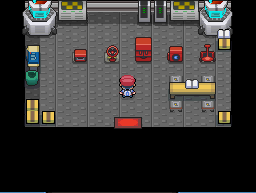
Mauville Game Corner

Being an indoors arena, weather moves/abilities cannot be used. There is no external water swource for moves like Surf, and seismic moves like Earthquake and Earth Power would do too much structural damage and are also banned. Dig is OK though.
All pokemon have the option of playing roulette once each round except on round 1. This does not take up an action but it does cost 10% of the pokemon's max HP and 5 energy. All betting, the spin of the wheel and any effects caused by the wheel all happen at the start of the round before any actions are executed. Here is a crude illustration of the roulette wheel:

(yeah they're meant to be equally sized spaces but I couldn't get them equally sized so this'll have to do)
Trainers may bet on a particular space (eg, orange makuhita), a particular colour (eg, green) or a particular pokemon (eg, azurill). If there are any bets, the roulette wheel will be spun and it has an equal chance of landing on each space (1/12). A pokemon can win different prizes depending on how it bet: - If a pokemon bets on a particular colour and wins, it regains 25% of its max HP and 10 energy
- If a pokemon bets on a particular pokemon and wins, it regains 25% of its max HP and 15 energy and its most recently acquired status effect (including temporary status like Leech Seed and Taunt) is removed
- If a pokemon bets on a particular space and wins, it regains 50% of its max HP and 25 energy and all status effects on it are removed
The stake of 10% max HP and 5 energy is not returned under any circumstances.
Arena: Protegas' Sanctuary
Field Type: Neutral
Complexity: Moderate
Format: Multiples, Melee (does not work in singles at all)
Restrictions: None
Protegas' Sanctuary
A 50ft-by-50ft stone temple for the relatively unknown deity Protegas that provides protection to those who seek it. The room is lit by torches that provide ample light. There is a fountain in one of the walls that provides a water source for moves like Surf. Although the arena is set indoors, the roof is ruined enough to allow weather moves to work. Despite being ancient, the temple still has a relatively strong structure that allows seismic moves like Earthquake to be used. The floor can be dug through as well and, over the centuries, some plant life has broken through the floor, allowing non-grass-types to use moves like Grass Knot.
At the beginning of every round, Protegas will protect any pokemon he feels is being ganged up on. A pokemon is considered to be ganged up on if it is targeted by: - At least four enemy single-target moves
- Three enemy single-target moves and at least two enemy multi-target moves
- Two enemy single-target moves and four enemy multi-target moves
- Six enemy moves, whether they are single-target, multi-target or a combination of the two
Note: this is done by the commands issued and stuff like Encore and Disable changing a pokemon's moves will not affect this, but substitutions will. Substitutions cannot be made based on whether or not an opponent's pokemon gets the barrier.
Any pokemon that meets any of those criteria will be given a protective barrier for that round. The barrier is treated as a 20 HP typeless pokemon with the same rank defences as the pokemon it is protecting. The barrier protects the pokemon from all effects of enemy attacks and will disappear once it runs out of HP, is hit by two enemy non-damaging moves or at the end of the round, whichever comes first. The barrier will not protect from any spillover damage (so an attack that does 25 damage will destroy the barrier and do 5 damage to the target). The barrier will not protect a pokemon from allied attacks that hit it, nor will it be affected by allied attacks. In battles with more than one active pokemon per team, a last pokemon standing will always receive Protegas' barrier at the start of a round unless every team is down to its last pokemon.
Arena: Park of Imagination
Field Type: Neutral
Complexity: Intense
Format: Multiples, Melee
Restrictions: NO MOVES!
Park of Imagination
A grassy park with a pond in the middle. Pokemon cannot use any moves at all. Instead, before each round begins, several random objects will appear (the ref decides how many, what they are and their effects - they can be literally anything so go nuts) and pokemon must use these objects to do anything.
Here are some suggested rules regarding the use of items in this arena: - All objects are usable by all pokemon with roughly equal capability.
- Picking up an object always takes an action and costs 3 energy unless specified otherwise.
- If an object's description says you can pick two up in one action, you can do this and it will cost 6 energy.
- An object that has been picked up can be dropped. This takes an action but has no energy cost.
- An object that has been picked up can be given to an ally. This takes an action and costs 3 energy.
- Throwing an object, swinging an object, equipping an object, shooting an object or using an object in any way always takes an action unless specified otherwise. The energy cost varies between items and commands.
- If an object can be picked up, it needs to be picked up before it can be used. If not, it can be used immediately.
- A pokemon may only hold up to two objects at once and may only equip one object at a time.
- 2-handed objects (eg, a battleaxe) will take up both hold item slots.
- Equipped objects do not take up a hold item slot.
- Objects that do typed damage do not get a STAB bonus unless specified otherwise.
Arena: Weather Simulation Chamber
Field Type: Neutral
Complexity: Intense
Format: All
Restrictions: No Self-Induced Weather
Arena: WarioWare, Inc.
Field Type: Neutral
Complexity: Moderate
Format: All
Restrictions: No Water Source, No External Grass, No External Rocks
Ref instructions: The posting order for the first round is: challenger sends out, acceptor sends out, ref issues challenge, acceptor orders, challenger orders, ref refs. Also, while not compulsory, you may wish to have characters from the WarioWare series issue the challenges. If so, here are some useful images: Wario, Mona, Jimmy T, Kat and Ana, Dribble and Spitz, Dr Crygor, 9-Volt, Orbulon, Ashley, Young Cricket
Arena: Chrono Stadium
Field Type: Neutral
Complexity: Intense
Format: Singles (can work for multiples and melee but not recommended)
Restrictions: No External Grass, No External Rocks
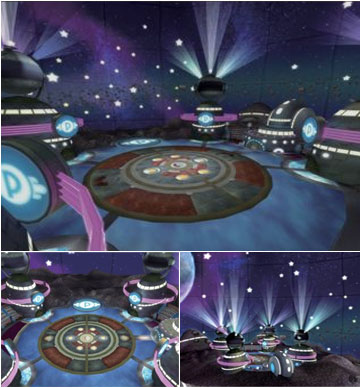
Chrono Stadium
Arena: Chrono Stadium
This arena resembles a giant version of the face of Prague’s Astronomical Clock. There is a moat around the edge of the arena but there are no natural elements such as grass nearby. The flow of time in this arena can change radically with the following effects: - Normal time flow
- Fast time flow
- Every pokemon's attack and special attack ranks are multiplied by 1.5 with halves rounded up.
- Every pokemon has +1 evasion.
- Slow time flow
- Every pokemon's defence and special defence ranks are multiplied by 1.5 with halves rounded up.
- Every pokemon has +1 accuracy.
- Reverse time flow
- Turn order is completely reversed (ie, higher priority attacks happen after lower priority ones and a slower mon's attack happens before a faster mon's one of the same priority).
- For attacks with a charge-up or evasive action (eg, Focus Punch, Sky Attack, Dig), swap the priorities of the charge-up/evasive action and attacking action before reversing the turn order.
- The "cooldown" action for combos occurs on the action before the combo is executed rather than after.
- Crazy time flow
- Turn order for each action is randomised, disregarding priority and speed completely.
- Attacks with a charge-up or evasive action still have that action occur before the attacking action.
Round 1 has normal time flow, then at the end of every round, each of the five time flows has an equal chance of being chosen for the next round. A time flow's effects remain until the time flow changes to something else.
Arena: Bubs' Concession Stand
Field Type: Neutral
Complexity: Moderate
Format: Singles, multiples
Restrictions: No Water Source, no External Rocks, restrictions may be added or removed during the course of the battle.
Ref instructions: When a pokemon is knocked out, the trainer whose pokemon gets the KOC must post to say whether or not they are buying new items before the trainer whose pokemon got knocked out sends in a replacement.
Bubs' Concession Stand
The battle takes place around Bubs’ Concession Stand where Bubs sells all types of crazy crap! At the start of the battle, there is no water source or rock source, but there is a grass source and weather, digging and seismic moves all work as normal. All of this can change as the battle goes on, but more on that later.
Players start with $50 per pokemon they battle with (ie, $50 for a 1v1, $100 for a 2v2, etc.) and, upon sending out their initial pokemon, can use this money to buy items for this battle from Bubs. Every time a pokemon gets a KOC, the owner gets another $50 and may buy more items from Bubs before the next pokemon is sent out. Once a player buys an item, he/she may equip it to any of his/her pokemon as long as the pokemon doesn't already have an item - a pokemon cannot hold more than one item at once in this way. Items bought in this battle cannot be taken out of the battle and items cannot be sold to Bubs.
Here are the available items and their prices. Items marked with a (*) are ones that affect the arena and are not held by pokemon, so when buying such items, the player does not need to specify a pokemon to hold the item.
[hide] - $20 items
- Aspear Berry
- Cheri Berry
- Chesto Berry
- Pecha Berry
- Persim Berry
- Rawst Berry
- $30 items
- Leppa Berry
- Lum Berry
- Mental Herb
- Oran Berry
- Power Herb
- Razz Berry
- Sitrus Berry
- White Herb
- Wonderland Biscuit - the holder can use an action and 4 energy (unless taunted) to increase its size class to 7 and its weight class to 12; one use
- Wonderland Juice - the holder can use an action and 4 energy (unless taunted) to decrease its size class to 1 and its weight class to 1; one use
- $50 items
- Absorb Bulb
- Air Balloon
- Cell Battery
- Muscle Band
- Sand Pit (*) - removes any external grass from the arena
- Grassy Field (*) - acts as an external grass source
- Sticky Barb
- WiseGlasses
- $80 items
- Damp Rock
- Heat Rock
- Icy Rock
- Instant Pond (*) - acts as an external water source
- Iron Ball
- Light Clay
- Pond Drainer 5000 (*) - removes any external water from the arena
- Ring Target
- Shoddy Decoy - the holder can use an action and 6 energy to gain a 1 HP Substitute without losing any HP (unless taunted); one use
- Smooth Rock
- $100 items
- Binding Band
- Destiny Knot
- Flame Orb
- Giant Parasol (*) - prevents all weather unless the weather-inducing Pokemon has the appropriate weather rock
- Grip Claw
- Metronome
- Rock Crusher (*) - removes any external rocks from the arena
- Rock Pile (*) - acts as an external rock source
- Scope Lens
- Tornado in a Can (*) - blows away pesky Giant Parasols, allowing all weather moves to be used
- Toxic Orb
- Wide Lens
- Zoom Lens
- $120 items
- BrightPowder
- Choice Band
- Choice Scarf
- Choice Specs
- Engineer (*) - busts up Seismic Dampeners, allowing seismic moves to be used
- King’s Rock
- Rocky Helmet
- Seismic Dampener (*) - prevents seismic moves
- Supercharger - when the holder uses a combo, its energy cost is reduced to (EC + (EC+4))*1.25 for same-move combos or (EC 1 + EC 2) for different-move combos; three uses.
- Titanium Softener (*) - softens Titanium Underlay and permits digging
- Titanium Underlay (*) - prevents digging
- $150 items
- Big Root
- Enigma Berry
- Eviolite
- Expert Belt
- Focus Band
- Focus Sash
- Leftovers
- Life Orb
- Razor Claw
- Razor Fang
- Smoke Ball
[/hide]
Arena: Monster House
Field Type: Neutral
Complexity: Moderate
Format: Singles, Multiples
Restrictions: No move restrictions, but this arena cannot be used unless all battlers have at least three pokemon suitable for the battle but not in the battle
Ref instructions: Battle music, and at the start of the match, choose randomly three pokemon from each trainer's profile that are suitable for the battle but not actually in the battle.
Monster House
You were traversing the dungeon. You reached the last floor before the boss battle. You found the room with the stairs. Then suddenly ... IT'S A MONSTER HOUSE!
But not just any monster house, oh no. The monsters in this monster house are pokemon from the player's own ASB profiles (with the condition that only pokemon suitable for the battle can be chosen - no bringing a Tyranitar to a weakmons fight for example - and pokemon that have been sent in for the players' teams cannot be monsters as well).
At the start of the battle, three suitable pokemon will be chosen at random from each player's profile, and then in each action, one of the six monsters will use one of its moves at random. The monsters will not use moves that affect only themselves or their allies except for stat-boosting moves, and when they use moves that affect opponents, the moves will only affect the battling pokemon, with single-target moves choosing randomly from the active battling pokemon and multi-target moves hitting all active battling pokemon. The monsters will not get any counters from the battle, including KOC. The monsters cannot be affected in any way by the battling pokemon.
All moves are still usable in the monster house and, apart from the monsters' moves working slightly differently as described above, they work as normal.
Arena: Witches' Brew
Field Type: Variable (starts neutral)
Complexity: Intense
Format: Multiples
Restrictions: None initially
Witches' Brew
The trainers battle on a huge platform suspended over a relatively small cauldron. The base of the platform is an iron circle with a tall indestructible glass barrier around the edge. On top of this circle is some earth that, at the top, has been made into a dirt circle with small boulders and patches of grass dotted around and a small water hole in the center. Basically, all moves can be used as normal in this arena.
During battle, some of the elemental energy from the pokemon's attacks will be absorbed by a strange liquid that is brewing inside the cauldron. This liquid is known as the Witches' Brew and the elemental properties it has absorbed are denoted by the Witches' Brew's seventeen elemental strengths (one for each attacking type except typeless). Any time a direct damaging attack is used, the Brew's matching elemental strength is increased by the BAP* of the move (for example, Fire Blast increases the Brew's fire elemental strength by 12). If, however, the move has fixed damage instead of BAP, such as Super Fang or Dragon Rage, the elemental strength is increased by the move's energy cost (ignoring STAB) instead. The increase happens if the move is successfully performed, regardless of whether or not the move hits.
Should the total of the Witches' Brew's elemental strengths ever equal or exceed 50, the cauldron will erupt at the end of the round and the Brew will splash over the base of the platform, causing the arena to transform in some way for the duration of the following round. If there is one highest elemental strength for the Brew, the arena transforms into one of these depending on which elemental strength is the highest:
- Normal
The platform turns from an earth-covered iron circle into grey plastic, as do the rocks and grass, though they can still be used as normal. The blandness of the platform rubs off on the pokemon. All items and abilities (including traits) are disabled and all pokemon become typeless, meaning they do not get STAB, weaknesses, resistances or immunities (for example, a Steel-type is now vulnerable to Poison-type moves and can be poisoned). The attacks, however, retain their typing. If, at the end of the round, a pokemon is suffering from a status that it is normally immune to, the status is removed unless this arena effect is refreshed.
- Fire
The ground turns into ash and volcanic rock with several fissures appearing in the rocky parts of the arena. Flames shoot out of these fissures at random. At the end of every action after other end-of-action effects have happened, there is a chance that a pokemon will get burned by the flames. This chance is equal to (size class) * 10%. In addition, the water in the water hole becomes much hotter, so Surf and Soak have a 10% burn chance in addition to their normal effects. Dive has a 10% chance of burning the user on the turn they go underwater and on every action they remain underwater.
- Water
The ground becomes sandy and the water level rises until it reaches 1ft above ground level. The deep water slows down the smaller pokemon in the arena. Size class 1 pokemon have their current speed reduced to 33%, size class 2 pokemon have theirs reduced to 50%, size class 3 pokemon have theirs reduced to 67% and size class 4 pokemon have theirs reduced to 75%. Flying, levitating and Water-type pokemon are exempt from this. The ability Swift Swim is activated by this effect unless it is already active due to rain.
- Grass
Writhing vines grow from the platform and cover the arena surface. These vines entangle all pokemon in the arena, keeping them in place. All speed boosts and drops are ignored for the round, moves that can't be used in Gravity will fail, and if a pokemon attempts to use a contact move, it pays the usual energy cost but the move fails as the vines prevent it from getting close enough to the opponent. Flying and levitating pokemon are vulnerable to all Ground-type moves while they are caught in the vines as though they were affected by Smack Down or Gravity.
- Electric
The barrier around the platform and the ground near the edge are covered in electrically-charged iron mesh. If a pokemon is hit by an attack with 8 or more BAP*, there is a chance that the attack will knock the pokemon into the mesh. This chance is equal to (move BAP* - target weight class) * 5%. If the pokemon is knocked into the mesh, it is inflicted with 25% paralysis unless it is Ground-type or has the ability Limber. Lightningrod, Motor Drive and Volt Absorb do not provide immunity to this effect.
- Rock
The ground becomes much more rocky and several huge stalagmites appear on the platform’s surface. These can be used to take cover behind as per the Take Cover command described in the DAT. The stalagmites are treated as having a size class of 6 for this purpose. If a seismic move is used and its BAP* is at least 3 more than the stalagmites’ size class, the stalagmites’ size class is lowered by 1 (to a minimum of 1) and any pokemon taking cover behind stalagmites take damage from a 6 BAP physical Rock-type attack from rank 5 attack.
- Ground
The ground becomes much harder and very cracked and uneven. The platform vibrates violently, causing intense tremors that throw the pokemon off balance. By default, the pokemon will focus purely on the action they are taking; however, with each action, pokemon may choose to keep balance in addition to whatever they are doing. Keeping balance increases the energy cost of the action by 4, while if a pokemon does not keep balance, there is a 25% chance that the tremors throw it off and its action fails (though the energy cost is still paid). Flying and levitating pokemon are exempt from this. In addition, the move Dig causes 10 damage to the user plus 10 damage for every action they remain underground, and flying and levitating pokemon are not exempt from this.
- Flying
A lot of fans appear in the barrier and blow strong gusts of wind in random directions. Every time a pokemon tries to act, there is a chance that the winds will blow it about so much that it cannot act. This chance is equal to (9 - weight class) * 5%, or * 10% if the pokemon is flying or levitating. If a pokemon cannot act for this reason, it does not use any energy.
- Ice
The ground turns into ice, making the arena very slippery. Evading attacks by means of the Dodge command, evasive Agility and evasive Teleport is impossible as pokemon try to maintain their balance on the ice, while contact attacks have their base power reduced by 3 for the same reason. Flying, levitating and Ice-type pokemon as well as those with the ability Suction Cups are exempt from this.
- Fighting
Some white markings are made in the ground to make the arena resemble a stadium of some kind, and a crowd appears around the edge of the arena and starts to call for a real fight. This results in all pokemon being unable to use non-damaging moves and commands as though they had been taunted. Any pokemon that are encored into a non-damaging move are no longer encored.
- Poison
Toxic sludge geysers appear in the ground and erupt at random. At the end of every action after other end-of-action effects have happened, there is a chance that a pokemon will get badly poisoned by the geysers. This chance is equal to (size class) * 10%. If the pokemon is already badly poisoned, the sludge increases the DPA by 1. If the pokemon already has regular poison, the sludge replaces this with bad poison with an initial DPA of 3. In addition, the water in the water hole turns to acid, so Surf has its base power increased by 2 and corrodes Steel-type targets, while Soak does 10 damage in addition to its normal effect. Dive does 10 damage to the user plus 10 damage for every action they remain underwater and, if they are a Steel-type, it corrodes them.
- Psychic
Shifting multi-coloured patterns appear on the barrier and the ground, making all pokemon think they’re tripping. This is reinforced by waves of psychic energy that are generated by the barrier and interfere with the pokemon’s minds. Every time a pokemon tries to act, there is a chance that the psychic energy will prevent it from performing its action. This chance is equal to (10 - special defence rank - special defence boosts) * 5%. Special defence drops count as negative special defence boosts and are added to the chance of failure. If a pokemon cannot act for this reason, it does not use any energy.
- Bug
The ground is covered in abnormally large plants and flowers that emit a scent that attracts a swarm of bees. Every time a pokemon uses a direct damaging move, there is a 20% chance that it will disturb the bees. If it does, that pokemon takes 10 damage at the end of each action until the end of the round. In addition, the scent is so calming that the ability Anger Point is suppressed, any Taunt and Torment effects are removed and the moves Taunt, Torment, Rage and Rage Powder will fail if they are used (though the energy cost is still paid for each one).
- Ghost
The arena takes on the appearance of a graveyard and frightening ghosts rise up from the graves, terrifying all pokemon. If a pokemon flinches, it must return to its pokeball at the end of the round and be replaced by another pokemon unless switching is not allowed or there are no available replacements. Ghost-type pokemon and pokemon with the ability Steadfast or Scrappy are exempt from this and pokemon with the ability Intimidate must flinch twice before being forced out. In addition, all actions have their energy cost increased by 2 and chilling restores no energy. Only Ghost-type pokemon and pokemon with the ability Scrappy are exempt from this.
- Dragon
The ground changes to bloodstained ash and scorched grass and a glowing crystal appears in the air above the water hole. The crystal gives off an aura that makes all pokemon feel more powerful, causing the base power of all direct damaging moves to be increased by 5 and their energy costs to be reduced by 2 (to a minimum of 1). In addition, if a pokemon uses a move with 14 or more BAP*, that pokemon’s relevant attacking stat is boosted to +6 regardless of whether or not the move hit.
- Dark
While the texture of the ground remains unchanged, the colour changes to pitch black and shadow duplicates of all pokemon emerge from the water hole. Every time a pokemon uses a direct damaging move, its shadow duplicate does damage to the target(s) of that move immediately after, even if the move failed to damage them. This damage is equal to the BAP* of the move used. If the move has fixed damage instead of BAP, the shadow duplicate's damage is equal to the energy cost of the move instead.
- Steel
The ground turns into iron with small amounts of rocks and grass being available in large glass containers. The iron arena is so hard that any attempt at digging through it will fail (though the energy cost is still paid). The water hole is removed, meaning all moves that require an external water source will fail, and a cannon takes its place. Pokemon of size class 4 or less can fire themselves out of the cannon for (8 + (weight class / 2)) energy. Firing oneself out of the cannon is a physical typeless attack with a BAP equal to (12 + weight class), 75% accuracy and a charge-up priority of +1 and a hit priority of -1, but multi-hit moves like Fury Swipes do not disrupt it. Only one pokemon may use the cannon at a time, so if a second pokemon tries to get into the cannon, it fails and does not pay the energy cost.
If, when the cauldron erupts, there is a tie for the highest elemental strength, then the arena will transform into an elemental amalgamation. Due to the conflicting elemental properties of the brew, the arena tries to transform in two or more very different ways. After some shaking, the arena transforms into an elemental amalgamation, meaning it is part bloodstained ash, part volcanic rock, part giant grass, part ice, part upward-flowing water, part toxic sludge, part dark matter, part electrically-charged iron and part patterned plastic. This doesn't cause the arena to have the properties of multiple typings though. Instead, injury and healing are swapped around, so any time a pokemon would normally take damage, it heals that amount of HP instead. Likewise, whenever a pokemon would normally restore HP, it loses that amount of HP instead.
* Here, BAP is used to refer to the base power of the move before all modifiers (including STAB and any arena modifiers) except the following: Technician, multi-target reduction and multi-hit hit roll.
Arena: Haunted Mansion
Field Type: Neutral
Complexity: Moderate
Format: All
Restrictions No Weather, No SolarBeam, No Water Source, No External Grass, No External Rocks
Haunted Mansion
The pokemon will be battling inside a large hall in a haunted mansion at midnight. Because the battle takes place inside, no weather effects will work here and SolarBeam cannot be used either. There is also no external water source, external rocks or external grass. In addition, all of the Rotom appliances can be found in the mansion, although because they are not in the hall, the command to possess an appliance costs 12 energy.
At the end of each round, one of the following will happen at random, with a 20% chance for each event (note: all pokemon have neutral natures): - The bath in the upstairs bathroom will fall through the hall's ceiling and land in the middle of the hall. For the rest of the battle, there will be an external water source; however, a Frillish will use Scald on the first pokemon that uses a move that requires an external water source. This event cannot happen at the end of round 1 and it can only happen once in the entire battle. If this event is rolled at the end of round 1 or after it has already happened, nothing will happen.
- A Chandelure floating close to the ceiling will use Will-O-Wisp on all active pokemon, even those that are already burned or immune to burn.
- A Misdreavus will materialise behind one active pokemon (chosen at random with each active pokemon having an equal chance of being chosen) and shriek loudly before quickly floating away. That pokemon will be unable to do anything on its next action.
- A Haunter will emerge from one of the walls, use Lick on one active pokemon (chosen at random with each active pokemon having an equal chance of being chosen), and then float through another wall.
- One of the Rotom appliances (chosen at random with each appliance having an equal chance of being chosen) will be possessed by a Rotom, who will then enter the hall, use its new form's special move (Overheat, Hydro Pump, Leaf Storm, Air Slash or Blizzard) on all active pokemon, and then return the possessed appliance to its original location. If, when this event is rolled, the chosen appliance is already being possessed by a player-owned Rotom, nothing will happen.
Arena: Transformice Map 128
Field Type: Neutral
Complexity: Intense
Format: Singles, Multiples
Restrictions No External Rocks
Transformice Map 128
This arena has no external rock source, but otherwise there are sufficient elements to make all other moves usable at their usual capacity. In addition, the pokemon have shaman powers that can be used to give them an edge using the Transformice objects. Summoning an object costs 5 energy. Each pokemon may only summon one object per round. Summoning has a charge-up priority of +1 and an execution priority of -1, and can be interrupted by multi-hit moves such as Fury Swipes. However, it is not subject to consecutive use energy penalty and cannot be Encored, Disabled or Imprisoned. Torment can prevent a pokemon from summoning the same object as it did last round, and Taunt can prevent a pokemon from summoning balls, boxes, planks and balloons. Here are the objects that can be summoned:
- Ball
- Summoning a ball is a team-wide effect. More than one ball may be in play at a time on each team's side.
- Whenever any single-target move is used against a pokemon with at least one ball on its side, the attacking pokemon may be distracted by a ball and attack that instead. The chance of this happening is equal to (number of balls on the target's side) * 10%, capped at 50%. If a ball is attacked, it is removed from play immediately.
- Multi-target moves will destroy all balls on the target's side and hit their intended target when used, but their BAP will be multiplied by 0.75 as per the usual rules of moves that hit more than one pokemon. Multi-target moves that would also hit allies (eg, Earthquake) destroy all balls in the arena.
- Balls cannot be unwillingly attacked by a pokemon summoning a spirit or a cannonball, nor can they be selected as targets by an anvil god.
- Box
- Summoning a box is a team-wide effect. More than one box may be in play at a time on each team's side.
- A box or group of boxes may be used as an object to Take Cover behind as per the Take Cover command's description in the DAT.
- One box is treated as having a size class of 4 for this purpose, and subsequent boxes add 1 to the group's size class. A box cannot protect from spirits, cannonballs or anvil gods however.
- Plank
- Summoning a plank is an arena-wide effect. More than one plank may be in play at a time.
- By itself, a plank does nothing. However, if at least 3 planks are in play, the external water source will be cut off.
- If a pokemon is underwater at the time this happens, that pokemon comes up just before the last plank is placed and, if it was using Dive, its attack is cancelled.
- Spirit
- Summoning a spirit is a single-target effect. Once a spirit is summoned, its effect happens and then it disappears.
- A spirit does a flat 10 damage to one target pokemon or removes one ball from play.
- If used against a pokemon, a spirit has a 100% flinch chance (though at priority -1 it will probably not flinch much) and, if that pokemon is attached to a balloon, the spirit's damage is increased to 20.
- Balloon
- Summoning a balloon is a single-target effect. More than one balloon may be in play at a time.
- A balloon can be attached to any plank, box or ball, or any pokemon.
- If it is attached to a summoned object, that object and the balloon are removed from play instantly.
- If it is attached to a pokemon, that pokemon gains the Levitate trait for 6 actions or until it uses Roost, a seismic move or a contact move, whichever comes first. When the pokemon no longer gains the benefits of the balloon, the balloon is removed from play.
- Balloons cannot be summoned while Gravity is in effect, nor can they be attached to pokemon under the effects of Smack Down. If, while a pokemon has a balloon attached to it, it is hit by Smack Down or Gravity is used, the balloon is removed from play immediately.
- Cannonball
- Summoning a cannonball is a single-target effect. Once a cannonball is summoned, its effect happens and then it disappears.
- A cannonball is treated as a 50% accurate 10 BAP physical typeless attack from rank 5 attack or the user's attack rank, whichever is higher. The attack also has a 50% chance of causing confusion if it hits.
- If the user has any boxes on their side, they may connect the cannonball to one of their boxes, giving the attack 100% accuracy but causing that box to be removed from play.
- If the target pokemon is taking cover behind a box or group of boxes, the attack has 100% accuracy and, in addition to its usual effect, removes one box from the target's side.
- If the target pokemon is attached to a balloon, the cannonball's base power is increased to 20 and the balloon is removed from play.
- Alternatively, a cannonball can be used to remove a ball or a box from play. If used in such a way, the cannonball is 100% accurate.
- Anvil
- Summoning an anvil is an arena-wide effect. More than one anvil may be in play at a time. However, only one anvil god may be in play at a time.
- By itself, an anvil does nothing. However, if at least 3 anvils are in play, they will combine themselves into an anvil god. Additional summoned anvils will attach themselves to the anvil god.
- An anvil god will attack one pokemon at random each action at priority -0.5, and its attack will be a 6 BAP physical typeless attack from an attack rank equal to the number of anvils. If the target is attached to a balloon, the BAP increases to 12. If there are any balls or boxes on the target's side, these are immediately removed from play and the attack that hits the pokemon does not suffer a BAP reduction.
- At the end of each round, an anvil god has a chance of leaving play equal to (number of anvils - 2) * 10%, or 100% if the anvil god has at least 8 anvils on it. If an anvil god leaves play, all anvils that make it up are also removed from play.
Arena: Bloons
Field Type: Neutral
Complexity: Moderate
Format: All
Restrictions No Water Source, No External Grass, No External Rocks, No Digging
Bloons
The pokemon are high in the sky on a circular wooden platform with a 100ft diameter. No external water source, rocks or grass can be found on this platform. The platform is too thin to dig through as well, but the wood is strong enough to allow seismic moves.
In addition to any items the pokemon may be holding, each pokemon starts the battle equipped with 5 darts. Once per round, a pokemon may throw a dart for 5 energy with the Throw Dart command. This cannot be Encored or Disabled, but can be prevented by Taunt, Torment and Embargo. The thrown dart will pop a randomly-chosen balloon and that balloon will have a specified effect. Here are the balloons along with their chances of being popped and their effects: - Normal balloon (25% chance): no effect
- Tack balloon (10% chance): deals 10 damage to all opponents
- Spike ball balloon (10% chance): deals 25 damage to the opponent with the highest health*
- Bomb balloon (10% chance): deals 25 damage to the opponent with the lowest health*
- Ice balloon (10% chance): freezes the opponent with the highest health* for 1 action
- Bee balloon (10% chance): does 10 damage per action to the opponent with the highest health* for 3 actions, shifting between pokemon each action if necessary
- Extra dart balloon (10% chance): gives the pokemon 1 dart
- Triple dart balloon (5% chance): gives the pokemon 3 darts
- Boomerang balloon (5% chance): gives the pokemon 1 boomerang and allows them to use the Throw Boomerang command, which works like throwing a dart except it also does 10 damage to the opponent with the highest health* and can be used while taunted but cannot be used if the pokemon is throwing a dart in the same round
- Lightsaber Balloon (5% chance): pops 2 balloons from this list (if one of those is another lightsaber balloon, reroll for that balloon)
* If it's a tie, choose randomly among the tied pokemon with an equal chance for each.
Arena: Mine Cart Ride
Field Type: Neutral
Complexity: Simple
Format: Singles
Restrictions No Water Source, No External Grass, No External Rocks, No Digging, No Flying, No Weather, No SolarBeam, No Seismic Moves, No Earth Power
Mine Cart Ride
The arena is set in an underground mine (so any moves that require an outdoors arena such as weather and SolarBeam are unusable). There is no external water source, no external rocks and no external grass. Furthermore, due to the nature of this battle, seismic moves (including Earth Power), digging and flying aren't allowed.
Throughout this battle, the two pokemon will be riding in mine carts on adjacent tracks that twist and turn through a large part of the mine. Thus, pokemon are forced to remain at close range. Once per round, a pokemon may use the Ram command, which has the following attributes: - Fixed damage: Fixed damage equal to (1 + user's weight class - target's weight class)*5, or 2 damage if the user's weight class is less than the target's weight class
- Energy cost: 7
- Priority: +1
- Secondary effect: Flinch
- Effect chance: 50%, or 70% if the user's weight class is at least 3 more than the target's weight class
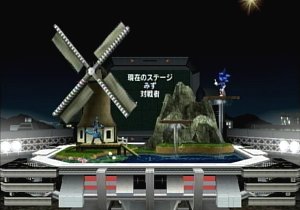
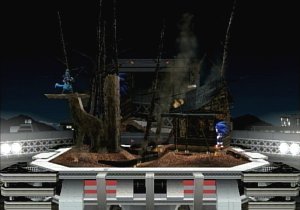
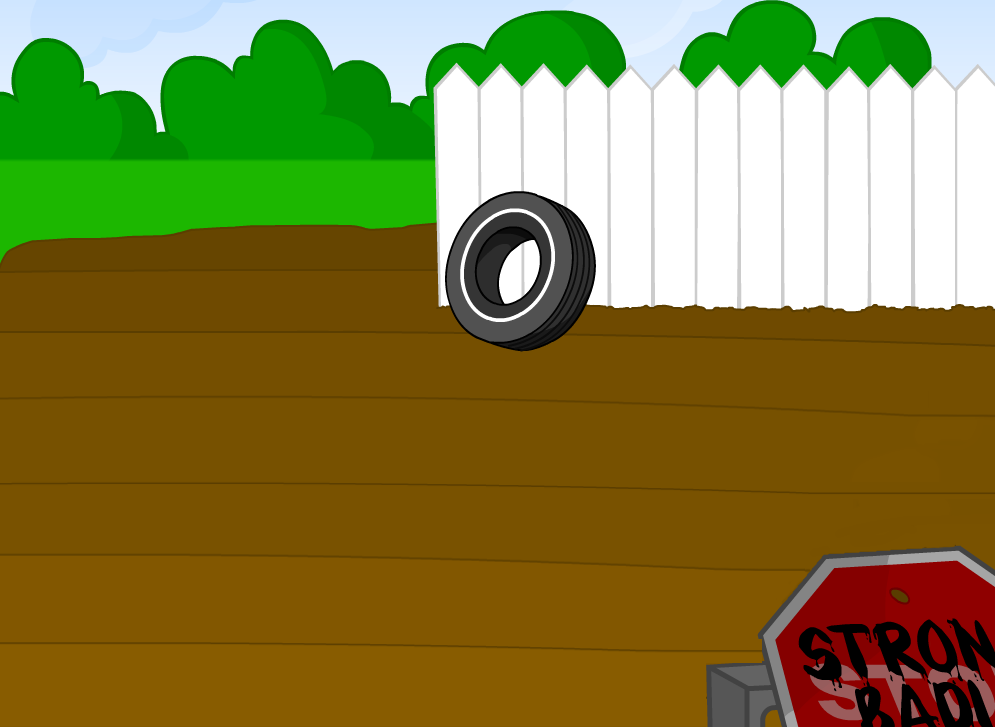
Arena: Strong Badia
Field Type: Neutral
Complexity: Simple enough to be a viable alternative to the ASB arena
Format: All
Restrictions No Water Source
Arena: Treadmills of Doom
Field Type: Neutral
Complexity: Intense
Format: Singles
Restrictions Water Source only for Surf, No Weather, No SolarBeam, No Natural Elements, No Digging, No suspending Fly, No Entry Hazards
Treadmills of Doom
Arena basics:
- No weather or SolarBeam
- External water source can only be used for Surf
- No natural elements (rocks, grass, etc.)
- No digging
- No suspending Fly
- Seismic moves allowed
The pokemon are inside what looks like an evil mastermind's lair, complete with death traps for any superheroes or secret agents that think they can bring said mastermind to justice. The actual arena is just one of these death traps: a bunch of treadmills set out in several rows with shark tanks at the ends of the rows. The walls on the sides of the arena have been marked at 10ft intervals and it is clear that the length of the treadmill arena is 100ft, not counting the shark tanks at each end. The treadmills' constant movement disrupts all entry hazard placement.
The key aspect of this arena is position, or more specifically, how far along the treadmills the pokemon are. The treadmills span positions from 1ft to 100ft, and the shark tanks are at locations 0ft and 101ft. The treadmills go in the direction of the shark tank that they are closer to, so from 1ft to 50ft, they go towards 0ft, and from 51ft to 100ft, they go towards 101ft. If a pokemon should fall into a shark tank, that pokemon is KO'd immediately. Flying and levitating pokemon are not exempt from this as the gravity in this room is slightly intensified - not enough for Gravity's effect to happen or for flying and levitating pokemon to lose their immunities to Ground-type and seismic moves respectively, but enough to force them to come to the ground briefly at the end of each action.
Detailed arena mechanics:
At the start of the battle, whoever sends out their pokemon first sends them out at the 50ft mark and whoever sends their pokemon out second sends theirs out at the 51ft mark. Any time a new pokemon is sent out, it is sent out at whichever position the trainer's first pokemon was sent out at.
At the end of every action, every pokemon will be pulled 1ft by the treadmills. For pokemon whose position is between 1ft and 50ft, subtract 1ft. For pokemon whose position is between 51ft and 100ft, add 1ft. In addition, all pokemon lose 1 energy as they try to stay away from the shark tanks. Pokemon with Hustle enabled lose 2 energy but do not get pulled by the treadmills. However, there are certain situations in which a pokemon will not run to stay out of the shark tanks. If a pokemon finds itself in one of those situations, it loses no energy but the treadmills pull it 5ft towards the nearest shark tank. These situations are as follows: - The pokemon chilled in that action.
- The pokemon cooled down in that action after using a combo.
- The pokemon is immobile, meaning that it is either under the effect of Ingrain, Wrap, Bind or Clamp, or it is grappling an opponent (dealing damage to it per action) with Wrap, Bind or Clamp.
- The pokemon is anchored (see the Anchor command for details).
- The pokemon failed to act at all in the action for any reason (including but not limited to flinch, sleep and full paralysis; however, not including confusion or a move missing or having no effect due to immunity).
All direct damaging moves except partial trapping ones like Wrap and Fire Spin have a knockback component. Unless the target is immobile, it will be pushed away from the user of a direct damaging move that hits it. If the user and target are in the same position, or if the move involves picking up or throwing the target (such as Circle Throw, Psychic or Sky Drop), the move sends the target towards the nearest shark tank. The knockback component is equal to the BAP of the move (before all adjustments except Technician, the *0.75 for multi-target moves and multi-hit calculation) plus the user's attack or special attack rank (depending on whether the move is physical or special) minus double the target's weight class. For moves that deal fixed damage, treat their BAP as half of the damage dealt. If the move is a contact move, its BAP is multiplied by 1.5. The end result is rounded off to the nearest whole number using normal rounding rules, but the knockback component is always at least 0ft. For example, a Modest Tomohawk's Hurricane against a Quiet Machamp has a knockback component of (12+5-2*5)=7ft, while that same Machamp's DynamicPunch against the same Tomohawk has a knockback component of (10*1.5+5-2*3)=14ft. There are a couple of special cases: Foul Play uses the target's attack rank as opposed to the user's, and a self-hit from confusion has knockback equal to a 4 BAP contact attack (see below) from the confused pokemon's attack rank and reduced by the confused pokemon's weight class.
In this arena, a pokemon that isn't immobile may use the Dash command to run to a particular integer position. The range of valid positions the pokemon can run to is its current position plus or minus 10% of its current speed (rounded to the nearest whole number) and the energy cost for using the command is (5 * distance travelled / maximum possible distance), rounded to the nearest whole number with a minimum energy cost of 1. If a pokemon tries to run to an invalid position, it will simply run as far as it can in that direction and the command will cost 5 energy. It doesn't matter whether there's another pokemon at the same position or not - the rows of treadmills are wide enough to allow multiple pokemon to share the same spot along the length of the arena. For example, an Adamant Raticate with no speed boosts or drops can run up to (97/10)=9.7ft (which gets rounded to 10ft) in either direction. If said Raticate is at the 20ft mark, this means it can run to the 10ft mark, the 30ft mark or anywhere in between. Running to the 13ft mark or the 27ft mark would cost it (5*7/10)=3.5 energy, which would be rounded to 4. If it tries to run to the 35ft mark, it will run as far in that direction as it can, which will take it to the 30ft mark. The Dash command cannot be encored or disallowed by moves that typically prevent certain moves from being used such as Taunt, and it is not subject to the consecutive move penalty.
Contact moves have a limited range based on the pokemon's size class. If the distance between the pokemon using the contact move and the intended target is less than or equal to the user's size class, the move will work as normal. Otherwise, as long as the pokemon is not immobile, it will try to run up to its target and use its intended move as if using the Dash command as part of the move, with the maximum distance being doubled if the move is Pursuit. The pokemon will only run until the distance between it and its target is equal to its size class before attempting to use the move; however, if the move misses, there is a 50% chance that the pokemon will then continue to run until it runs as far as it possibly could. If the move being used is U-turn, the pokemon will then return to its previous position immediately. Otherwise, it will remain in its new position until it is moved by the treadmills. In the event that the pokemon cannot reach its target, it will fail to use its intended move, but the fact that it managed to Dash means it doesn't count as failing to act and, if the intended move was a combo, the pokemon is not forced to cool down on the following action. An immobile pokemon that attempts to hit an out-of-range opponent with a contact move will simply fail to act. For example, an Adamant Gliscor at the 30ft mark can use Acrobatics on an opponent whose position is between 27ft and 33ft as usual. Said Gliscor can run up to (95/10)=9.5ft (which gets rounded to 10ft), so would also be able to hit opponents whose position is between 17ft and 43ft, but this would require Gliscor to spend some energy travelling towards the opponent. Attempts to hit opponents any further away will result in Gliscor running to either the 20ft mark or the 40ft mark, whichever is closer to the intended target of Acrobatics, but Gliscor won't execute its intended move. There are other commands that may be used in this arena. The Sprint command allows a pokemon to run up to three times as far as it could with the Dash command for an energy cost of (20 * distance travelled / maximum possible distance). However, the pokemon will have to cool down on the next action as though it had just used a combo. This command, like the Dash command, cannot be encored or prevented by moves that usually prevent moves. Unlike the Dash command, this command cannot be used while enduring.
The Anchor command costs 5 energy and gives the pokemon a "permanent" anchored effect. This effect prevents the pokemon from being removed from play by opponents' moves and reduces the knockback of all damaging moves except those that involve picking up or throwing the pokemon (such as Circle Throw, Psychic or Sky Drop). If the pokemon has Suction Cups, the knockback is eliminated completely; otherwise, the knockback is halved and rounded to the nearest whole number. However, being anchored also removes any immunity to Ground-type moves and, any time the pokemon is hit by a direct damaging move that doesn't involve picking it up or throwing it, it loses energy equal to 50% of the knockback the move has. If the pokemon is successfully picked up or thrown, or if it attempts to use the Dash command, the Sprint command, a contact move on an out-of-range target or any move that involves jumping or flying, or if the pokemon is ordered to end its anchored effect as part of another action, its anchored effect ends. Finally, this command cannot be encored and, with the exception of Taunt, cannot be prevented by moves that usually prevent moves.
__________________
<dogfish44> I got a suprise KFC ^.^
<Glacier> kinky fat chick?
Last edited by Objection; Feb 11th, 2013 at 8:49:31 PM.
Reason: Adding a clause to the WarioWare arena and another to the Treadmills of Doom.
|