
-
Follow our Instagram!
-
Curious about what we're currently doing about bots? Check out the latest updates from staff in this thread.
-
Welcome to Smogon! Take a moment to read the Introduction to Smogon for a run-down on everything Smogon, and make sure you take some time to read the global rules.
You are using an out of date browser. It may not display this or other websites correctly.
You should upgrade or use an alternative browser.
You should upgrade or use an alternative browser.
Social LGBTQIA+
- Thread starter dhelmise
- Start date


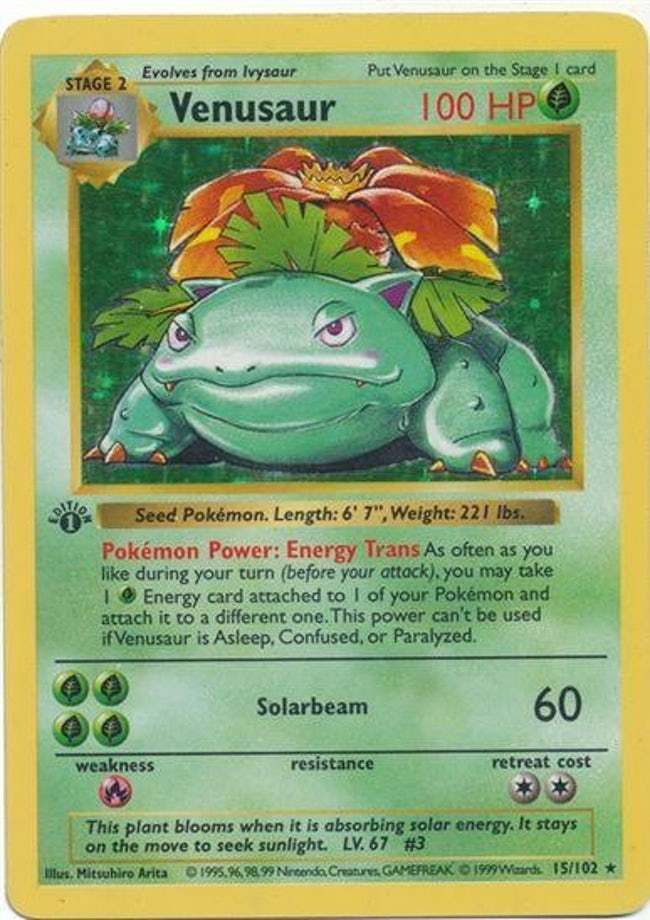
Base Set Venusaur said trans rights btw


Jomatoes said:he transitioned! good for him!Just leaving this here that Azurill says Trans Rights too (snip)


rubysapphiremerald said:just because other struggles exist that you can compare your current ones to doesnt make the ones that you experience less valid. you have every right to complain, your struggles are real and valid and it is okay to be exhausted by them.I have literally no right to complain
keep fighting and stay strong.


Jakee it is quite dehumanising and insulting for me and others to have come out and discussed extremely personal issues about our lives on this thread only to be followed by very low effort posts saying "guys, marill is transgender XD", by forum moderators no less. but sure, go for the cheap gotcha. hope it makes you feel better bud.
Chloe said:Jakee it is quite dehumanising and insulting for me and others to have come out and discussed extremely personal issues about our lives on this thread only to be followed by very low effort posts saying "guys, marill is transgender XD", by forum moderators no less. but sure, go for the cheap gotcha. hope it makes you feel better bud.
If you can say the same things to others you should really be able to hear it yourself.
If you had an issue with the memes and truly believed they were as hurtful as you do - you should of taken it to the mod directly in pm's rather than complaining about it in the thread, but hey we all make mistakes.. right!
they are lighthearted memes - most of the time created by folks in the community - so really I don't see the harmfulness in them. Squirtle isn't gay? It's a fake character? It's making fun of coming out? I can't and will not defend the marill meme because it's not mine to defend or have an opinion on - but the "low effort" posts are really just nitpicking at this point. I've seen posts with less effort than all of those memes - and like I said the squirtle meme is cute.
They found a meme, they wanted to share with others like them, because it related to them, the meme itself is not throwing any callouts at anyone and I think you're just being hypocritical at this point. I won't call you sensitive because your feelings are valid, and I do respect them. I just think you need to do some prioritization of your morals here.
don't dish what you can't take, bud.
Last edited:

i get where you're coming from, i found the meme to be pretty cute too and i enjoyed it, but her point is that this is marked as a serious thread. it's not a personal attack on any given person for enjoying the memes but it's like, ppl have this thread watched (myself included) because it's marked as a serious thread for lgbtq+ discussion and if that isn't what people want then that's totally fine but it shouldn't be advertised that way. the memes are obviously totally harmless on their own, it's just that they don't rly belong in the Serious Place. i understand the counterargument that there isn't really anywhere else for these posts to go but if they're undermining other important discussion then maybe they should just be saved for discord servers with your friends. the original callout post was worded needlessly harshly though.
Sorry for not getting to this earlier, it was irresponsible of me.
It was short-sighted to open the floodgates for those kinds of memes; Cong tends to value more high-effort posting and Chloe was here for that, so the criticism is well-grounded. With that said, I've added a "No Meme" rule to the OP. If people want to continue with the memes, the Smogoff meme thread suffices. Pokepride also has a meme channel, for what it's worth.
Lilburr said:It's quite alright. I've been told I can be intimidating to talk to because of my wording patterns, so I suppose Chloe didn't know what else to do. It's something I'm trying to work on.the original callout post was worded needlessly harshly though.
It was short-sighted to open the floodgates for those kinds of memes; Cong tends to value more high-effort posting and Chloe was here for that, so the criticism is well-grounded. With that said, I've added a "No Meme" rule to the OP. If people want to continue with the memes, the Smogoff meme thread suffices. Pokepride also has a meme channel, for what it's worth.
Last edited:


I was having a discussion about this with some online friends a few days back, thought it might be interesting to post it in here. My mates and I were talking about the word queer and my personal dislike for it, especially the way it's been watered down to mean just about anything by various different communities wanting a piece of activism. A few days later, in a conversation with my girlfriend, she referred to the general LGBT population as "the queers" and I just about felt my skin crawl.
I cannot stand that word whatsoever. The connotations it has are really terrible, and the sort of people I associate self-identification with queer as a label with are not the type I want to be around. It's a very personal decision that I'm aware of, but it's one of the more confusing pieces of "slur reclamation" that I've seen, if only because it's shifted to also include just about any form of nonconformity.
I wish it wasn't mainstreamed so much. It's a word that's still used in a harmful way to this day.
On a happier note, my nan and uncle have apparently dropped off a bunch of sequins and ornaments that we've had in the family for years at our house and said I could use them to "make an outfit for Pride." It's the first time they've gone ahead and acknowledged & supported me being different. I have barely any sewing experience, but those are getting used somehow.


Exeggutor said:I was having a discussion about this with some online friends a few days back, thought it might be interesting to post it in here. My mates and I were talking about the word queer and my personal dislike for it, especially the way it's been watered down to mean just about anything by various different communities wanting a piece of activism. A few days later, in a conversation with my girlfriend, she referred to the general LGBT population as "the queers" and I just about felt my skin crawl.
I cannot stand that word whatsoever. The connotations it has are really terrible, and the sort of people I associate self-identification with queer as a label with are not the type I want to be around. It's a very personal decision that I'm aware of, but it's one of the more confusing pieces of "slur reclamation" that I've seen, if only because it's shifted to also include just about any form of nonconformity.
I wish it wasn't mainstreamed so much. It's a word that's still used in a harmful way to this day.
re: "identifying" as q: Thinking about it w relation to queer theorists, "queer" is something you act or feel and not necessarily something you can "be" (something conceived in opposition to identity politics from what i can tell). But it's also become political shorthand for a wide breadth of non-comforming behaviors / people. In that sense I don't think I'd ever call myself queer, but I feel comfortable thinking about lgbtq groups that are marginalized and targeted by social policies / violence as queer. I'd like to think that the latter is hopefully not an extension of said violence, and of course if someone didn't want to be referred to in that way it would just make sense to respect their wishes there.
For me, the use of queer pejoratively (and I guess...non pejoratively? now that its been 'reclaimed') seems similar to the use of gay--if anything I've seen many, many more people use gay pejoratively than queer(I recognize how anecdotal that is and I'm just including it to provide context for my own opinion on the matter). Queer started as describing "non-normalcy" generally (the example I hear thrown about is an old northern english saying 'theres nowt so queer as folk') and became more specifically about gnc / non heterosexual men and women in the late 19th / 20th century. The core connotation is demonizing deviancy or non-normalcy... The 'evil' of existing outside sex / gender norms is taken for granted and not really baked into the etymology itself. That feels like something appropriate to reclaim to me, since the norm is constructed, and existing outside the binaries set up for us by society is ultimately neutral.
Outside of personal usage / identifiers, there is definitely the risk of alienating and fragmenting community spaces (a relatively benign example would be a community event called BBQueer held by the local lgbtq org at my school was pretty contested), which generally feels like a net loss. There's a fundamental tension in the label of queer resisting definition (which I think a lot of people encourage for better or worse), and its supposed political / material value as some kind of descriptor-especially when so much queer theory has yet to trickle down into mainstream discourse or policy in any meaningful way. But ultimately that's something that we just have to be vigilant about in the ways it's being used (you mentioned 'wanting a piece of activism' which feels all too real), similar to other forms of pinkwashing and gay labels. The problem is absorption or being made 'trendy' in such a way that it allows people to ignore the liberation of marginalized lgbtq ppl, and I think there are ways to use queer that avoid those pitfalls.
If the question is why use queer when it runs the risk of alienating people and ultimately is used very similarly to gay / lgbtq / etc...part of the attraction of the term for me is its definitive non-normativity. That is to say, since it by definition implies nonconformity, it has a certain level of resistance to mainstreaming. That's definitely very idealistic since it has already been mainstreamed in many ways lol, but for me that gives it a level of political power that feels useful, even if it's fraught.
This is a tough topic and I'm glad you're opening the floor for it. I've seen the conflict hinted at in a variety of lgbtq places but never really explicitly addressed. Writing this very rambly post (that really doesn't come up w any answers) made me reexamine a lot about how/why I use the word in my day-to-day--I know you weren't exactly asking to have a drawn-out discussion about this but I think it's a good conversation to be having itt. The term being too amorphous / too trendy are definitely huge things to grapple w, and I'd love to hear more abt your / other ppls thoughts on the issue.
Last edited:
brightobject said:Thanks for giving such a detailed response! I know we don't talk too often, but you're always really insightful.re: "identifying" as q: Thinking about it w relation to queer theorists, "queer" is something you act or feel and not necessarily something you can "be" (something conceived in opposition to identity politics from what i can tell). But it's also become political shorthand for a wide breadth of non-comforming behaviors / people. In that sense I don't think I'd ever call myself queer, but I feel comfortable thinking about lgbtq groups that are marginalized and targeted by social policies / violence as queer. I'd like to think that the latter is hopefully not an extension of said violence, and of course if someone didn't want to be referred to in that way it would just make sense to respect their wishes there.
For me, the use of queer pejoratively (and I guess...non pejoratively? now that its been 'reclaimed') seems similar to the use of gay--if anything I've seen many, many more people use gay pejoratively than queer(I recognize how anecdotal that is and I'm just including it to provide context for my own opinion on the matter). Queer started as describing "non-normalcy" generally (the example I hear thrown about is an old northern english saying 'theres nowt so queer as folk') and became more specifically about gnc / non heterosexual men and women in the late 19th / 20th century. The core connotation is demonizing deviancy or non-normalcy... The 'evil' of existing outside sex / gender norms is taken for granted and not really baked into the etymology itself. That feels like something appropriate to reclaim to me, since the norm is constructed, and existing outside the binaries set up for us by society is ultimately neutral.
Outside of personal usage / identifiers, there is definitely the risk of alienating and fragmenting community spaces (a relatively benign example would be a community event called BBQueer held by the local lgbtq org at my school was pretty contested), which generally feels like a net loss. There's a fundamental tension in the label of queer resisting definition (which I think a lot of people encourage for better or worse), and its supposed political / material value as some kind of descriptor-especially when so much queer theory has yet to trickle down into mainstream discourse or policy in any meaningful way. But ultimately that's something that we just have to be vigilant about in the ways it's being used (you mentioned 'wanting a piece of activism' which feels all too real), similar to other forms of pinkwashing and gay labels. The problem is absorption or being made 'trendy' in such a way that it allows people to ignore the liberation of marginalized lgbtq ppl, and I think there are ways to use queer that avoid those pitfalls.
If the question is why use queer when it runs the risk of alienating people and ultimately is used very similarly to gay / lgbtq / etc...part of the attraction of the term for me is its definitive non-normativity. That is to say, since it by definition implies nonconformity, it has a certain level of resistance to mainstreaming. That's definitely very idealistic since it has already been mainstreamed in many ways lol, but for me that gives it a level of political power that feels useful, even if it's fraught.
This is a tough topic and I'm glad you're opening the floor for it. I've seen the conflict hinted at in a variety of lgbtq places but never really explicitly addressed. Writing this very rambly post (that really doesn't come up w any answers) made me reexamine a lot about how/why I use the word in my day-to-day--I know you weren't exactly asking to have a drawn-out discussion about this but I think it's a good conversation to be having itt. The term being too amorphous / too trendy are definitely huge things to grapple w, and I'd love to hear more abt your / other ppls thoughts on the issue.
I'm going to say from the getgo that I have little interest in engaging with queer theory now and probably never will. I don't come at these things with some sort of academic mindset, I'm stupid as fuck, all of these are just feelings.
brightobject said:The lack of definition is something that really bothers me. I had a talk with a few older, millenial LGBT people that I speak with pretty regularly, and I was really baffled by the insistence of some of them that, for example, kink is inherently queer, by virtue of its deviation from the norms of sexuality. Existing as an implication of nonconformity means that queer is all-inclusive in the best and worst ways.That is to say, since it by definition implies nonconformity, it has a certain level of resistance to mainstreaming.
It's also a word I associate with obfuscated identities - I don't believe anyone should feel pressure to label themselves as they want, or to reject labels, but an umbrella term like queer also removes the nuance and difference between different LGBT people. It attempts to make a larger universal "queer" culture or experience that doesn't really exist. Generally, I've found myself unable to relate to the sort of person who self-describes as queer, because it speaks to an experience wrt their gender and/or sexuality that does not align with mine in the slightest.
It's also a term I associate with a particular type of LGBT person - young, liberal, American, very online. None of those are bad things, but it's also people from that crowd that tend to refuse to recognise or downplay people's objections to having it used as an umbrella term.
I'm really glad to have a discussion going to be honest! It's nice to hear your thoughts, it'll be nice to hear what other people think too if anyone shares.
Exeggutor said:Thanks for giving such a detailed response! I know we don't talk too often, but you're always really insightful.
<3 likewise
And re:engaging w theory, thats fine. If the theory is going to be effective it should be applicable without having studied it for five billion years. I'm certainly not super familiar w a lot of queer theory myself by any means, but my general thoughts on it are if it has no use in helping real ppl parse and deal w their stuff its just academic circlejerking
The lack of definition is something that really bothers me. I had a talk with a few older, millenial LGBT people that I speak with pretty regularly, and I was really baffled by the insistence of some of them that, for example, kink is inherently queer, by virtue of its deviation from the norms of sexuality. Existing as an implication of nonconformity means that queer is all-inclusive in the best and worst ways.
It's also a word I associate with obfuscated identities - I don't believe anyone should feel pressure to label themselves as they want, or to reject labels, but an umbrella term like queer also removes the nuance and difference between different LGBT people. It attempts to make a larger universal "queer" culture or experience that doesn't really exist. Generally, I've found myself unable to relate to the sort of person who self-describes as queer, because it speaks to an experience wrt their gender and/or sexuality that does not align with mine in the slightest.
I think label-chasing is generally a huge problem but not something i rly attribute to the queer label. If anything it feels like it helps to have a larger umbrella to use while younger ppl are still experimenting and making mistakes...i feel like its a product of the social media era + the hypervisibility of lgbtq communities w how deeply their aesthetics have been co opted and overly classified. From what I have learned about the idea of queerness, it exists in opposition to binaries, including the queer / non-queer binary (i.e....you have to prove yourself or express yourself in a certain way to "claim" queerness). It feels more about recognizing the different and nuanced experiences of all people in the way we butt up against the norms that society (i guess focused around sexuality and gender expression, but since those things are so intertwined with like everything else...). Just like the label of LGBT (and frankly most labels), I feel like their primary use is practical / political in terms of creating some kind of space through which to advocate for one's humanity in the face of incredibly punitive cis/heteronormative laws (which exist everywhere lol). In the sense that all LGBT ppl (hopefully) want laws to be loosened in terms of their slavish obedience to those norms, i think there is a real solidarity there. Or we should aim for one at the very least.
It's also a term I associate with a particular type of LGBT person - young, liberal, American, very online. None of those are bad things, but it's also people from that crowd that tend to refuse to recognise or downplay people's objections to having it used as an umbrella term.
lol...well u read me dead on haha (except the liberal part ig). Is queer something thats not used as much in the uk / outside of the us?
I guess my general impression of the modern lgbt / whatever movement is that its incredibly fragmented and slowed down by lots of this kind of infighting over labels. I'm not sure where this should stop or start--language obviously has weight and power but ultimately we should still be focusing on material rather than superficial changes. There's probably some point where we can recognize that certain semantic threats are much more dire and significant than others and agree to disagree on the rest. I hope this doesn't come across as me being dismissive lol--i want to keep this conversation going but it's more of a desire to learn rather than trying to get an epic win for queerness. I think what we both want is communities where there is mutual recognition and respect for people's preferences in terms of language and labels...up to a point ofc
Last edited:

How hard is it to like...... just not go to the hot take presses without knowing the history of a thing. Queer, as an umbrella term, quite literally was the most common term for non cis non hetero people in the early 1900s. It was co-opted and used insultingly (much like it’s successor ‘gay’ was) but it’s origins were in self-identification and community.
If you want to talk about the shitty impulse of people to try and smuggle in shitty politics like “kink is queer” great have a blast but it’s not because they use a certain word it’s because they don’t know shit about what they’re talking about. It’s not queer for Janet Susans to find getting spanked by her husband arousing. Queerness is very specifically about non conformity relative to heterosexuality and cis normativity.
I mean I really do think there’s a rich bed of criticism to be levied towards the people who try to make every facet of their personality into a marginalized minority and the hyper shitty extensions that come from that kind of approach to politics, as well as how often they attempt to co-opt existing words to fit that world view. But you’re misdiagnosing that problem as having to do with the word they’re co-opting.
Valk put it better than I could have about the "misdiagnosis" of queerness as the disease. To be honest though I'm uncertain what the solution to that problem of such co-opting is, especially when it's happening on such a large scale...bleh. Guess calling it out when it happens is the first and most important step.
Anyway, I took her criticism to heart and ended up doing some digging on the history / usage of queer to check my perception of the word (thanks libgen), figured some cliff notes on the topic* would be nice to share itt. Always cool to learn more abt this kind of history and the existence of these subcultures in the early 1900s* and beyond has been largely made invisible.
*Mostly jumping off of the introductory chapters of George Chauncey's Gay New York: Gender, Urban Culture, and the Making of the Gay Male World, 1890–1940. this post is so heavily indebted to the one book (and is very much an imperfect paraphrasing of its content), so if there's other conflicting info / divergent, obscure histories out there I really wanna see it.
To pull this back into the present though: Again, very cool to learn abt the history of the word in this period / just queer history in general. I'm definitely gonna read up some more on the pre- and post- war eras since it's obviously where a lot of our modern conceptions of gender and sexuality started to take concrete shape. There had always been a gap in my knowledge here before the 70s...so this is only the start! I still think my feelings on the word queer are very much positive. It's been used in a lot of different ways in the past century or so (contrary to my expectations it has very much been used by authorities and the mainstream media as a derogatory term to create real harm-I've mostly associated more pathologic terms with the former, perhaps naively) but the core idea of nonconformity feels like it has kept it coming back.
Re: kink...it feels very similar to the word queer in that it basically just describes something that is "off" (and seems to have originally been used as a noun for a 'sexual deviant' similarly to queer). So how is kink not inherently divergent from the idea of 'vanilla' heterosexuality? I feel like if the argument is a political one, it makes little sense to try to claim something like kink is 100% conforming...isn't the problem/ difference more along the lines of a lack of societal punishment / persecution (depending on one's interpretation of kink)? Or is kink another word that's been co-opted and totally washed out to include every kind of 'erotic' behavior? I admit I've not seen the word used too often so I'd love to see its meanings / differences in function crystallized.
Anyway, I took her criticism to heart and ended up doing some digging on the history / usage of queer to check my perception of the word (thanks libgen), figured some cliff notes on the topic* would be nice to share itt. Always cool to learn more abt this kind of history and the existence of these subcultures in the early 1900s* and beyond has been largely made invisible.
big
This all gets generally very tricky since the modern categorization of ppl into a heterosexual / homosexual binary, et al. (or even the modern conception of sexuality as a category) is a pretty recent invention, so the chronology and history become obtuse very quickly. Honestly, doing research into this made me aware of just how young a lot of these binaries are. The often blurry lines between endonym and exonym (labels created and used internally by a group, and labels used for a group by outsiders) don't help matters, either.
Anyway in the late 1800s/early 1900s, queer / fairy / f*g / etc were used relatively interchangeably by the larger public in referring to the 'gay community' (notable pejorative examples can be found in a lot of the material surrounding the trial of Oscar Wilde). Internally, however, each of these words also denoted specific social subcategories. 'Queer' specifically meant men who assumed the (accepted) sexual or cultural roles of women. Men who retained masculine behaviors were not considered "homosexual" if they pursued "queers" or "fairies" (is it just me or is this shit kind of ahead of its time). Sexuality was defined more by gender performance than it was physical sex until the mid-late 1930s / 40s / 50s. The separate decades having to do w the various neighborhood cultures (Euro-American, middle-class, African-American, etc) in NYC adopting the idea of compulsory heterosexuality at different moments in history.
By the 1910s and 1920s, queer's usage shifted as the sexual regime changed (though different people still used it differently). Queer men (whose classification had already started shifted to being based on homosexual preference versus gender presentation) largely considered themselves interested in "normal" men and rejected the effeminate presentation of the "fairy." (definitely feels regressive but perhaps thats just me). Ultimately though, the takeaway for me is how the word seemed more focused on practical concerns, creating more specific classifications to navigate social interactions effectively and subtly.
In the 30s and 40s, "queerness" became a rallying cry for a set of really vicious press campaigns against homosexuality, mostly revolving around the threat to children posed by "queer" people. During this transitory period (s) queerness often became a site of internal violence against "queer" people as the "gay" community sought to establish itself in some kind of normalized space. So the older models of 'queerness' more fundamentally intertwined with gender nonconformity basically got cannibalized as part of the cultural backlash to the blooming gay culture in urban sites during Prohibition - definitely where a lot of transphobia associated with the gay community today can be traced back to.
The difference between queer et al. and gay is actually the opposite of what it might be considered to be now: earlier terms denoted different types of homosexual men - effeminate (in the case of queer), conventionally masculine, etc. The "gay" label brought together, deemphasized their differences through the emphasis on the presumed similarity of character demonstrated through their choice of sexual partner. Sometime around this time is where the idea of "trade" men who willingly had sex with other men while maintaining otherwise conventional lifestyles became a marker of being "closeted" and not "truly gay."Actually wild (like the rest of this book-very excited to keep reading!).
...I couldn't find anything specifically about terminology used amongst lesbians at the time. I found a decent number of sources about the lesbian subcultures in NYC during the 20s and 30s, but nothing specifically outlining their parlance...please someone help me out here!
*Mostly jumping off of the introductory chapters of George Chauncey's Gay New York: Gender, Urban Culture, and the Making of the Gay Male World, 1890–1940. this post is so heavily indebted to the one book (and is very much an imperfect paraphrasing of its content), so if there's other conflicting info / divergent, obscure histories out there I really wanna see it.
To pull this back into the present though: Again, very cool to learn abt the history of the word in this period / just queer history in general. I'm definitely gonna read up some more on the pre- and post- war eras since it's obviously where a lot of our modern conceptions of gender and sexuality started to take concrete shape. There had always been a gap in my knowledge here before the 70s...so this is only the start! I still think my feelings on the word queer are very much positive. It's been used in a lot of different ways in the past century or so (contrary to my expectations it has very much been used by authorities and the mainstream media as a derogatory term to create real harm-I've mostly associated more pathologic terms with the former, perhaps naively) but the core idea of nonconformity feels like it has kept it coming back.
Re: kink...it feels very similar to the word queer in that it basically just describes something that is "off" (and seems to have originally been used as a noun for a 'sexual deviant' similarly to queer). So how is kink not inherently divergent from the idea of 'vanilla' heterosexuality? I feel like if the argument is a political one, it makes little sense to try to claim something like kink is 100% conforming...isn't the problem/ difference more along the lines of a lack of societal punishment / persecution (depending on one's interpretation of kink)? Or is kink another word that's been co-opted and totally washed out to include every kind of 'erotic' behavior? I admit I've not seen the word used too often so I'd love to see its meanings / differences in function crystallized.

Spoiler
This is the culmination of over 4 years of hard work and exploration of oneself, and I couldn't be happier.
When I was a little kid, I never really fit in with boys; instead, I went to play with the girls. I always tried to fit in with the girls instead, and for moments, I forgot all of the gendered norms, and I was able to be my true self. Ever since then, I have tried to do anything to go back to those days, but without me ever knowing. I've pretended to be a girl online, and I looked at other women and thought, "I wish I was that person." I acted much more feminine, adopted a higher pitch voice and tried to grow my hair out, all for a goal I didn't even know I was aiming for. The main thing that kept me down was the radical transphobia present in my surroundings, which had placed a deep inner transphobia in me. Whenever I had considered that option, I thought to myself, "No, I can't be trans, I don't want to be trans" and I let myself suffer for longer. I also have extreme anxiety which prevents me from speaking my real feelings and instead just using a coping mechanism like humor or even breaking down. Life was like a giant egg, where my feelings and thoughts were contained in that egg, bound outside of the rest of the world, and I didn't have the strength to hatch.
But, like all eggs, it finally cracked open.


I'm not sure where to begin this, but I'll try and make this coherent.
A year in retrospect
It's been a while since I've posted here. A year in fact, since I came out. With Covid hitting, It's hard to say whether a year has flown past or dragged on. Regardless, I don't think I'm quite the same person who first sat down to write a post that would still disguise some of my true feelings. I felt trapped, and not just by my gender identity but the results of bottling in emotions for years. I had to act a certain way, talk a certain way, because letting people see the inside of me was much scarier than hurting people. Even after I came out, I felt I was always going to be who I was before, no matter if I had changed or not. I would always be seen like that, and expected to act accordingly. So I kept doing terrible shit, even if I wanted to stop. It was an excuse for not wanting to be better as much as possible. It took a lot to want it, to want to be someone who people could respect and like. And I thought that would be it, once I found that motivation, but equal parts of me felt like a fraud, and still do. I've gotten opportunities to start over that some have never gotten, and I've barely done anything with them.
I came out to my mom in July, and my cousin in November, with varying results. My cousin is supportive and I love her for that, but based on the results with my mom it may be a bit before I ever tell my dad, especially considering some of the comments he's made and continues to make. I never thought growing out hair or doing benign stuff like shaving my legs could be a source of so much derision. I wish I could be that person who stands up to injustice or just stands up in general, but that has never been me. It hurts more than anything to be spat at and told I don't care about anyone or anything. I'm scared at how much I've internalized it. I thought as time passed I would grow to like how I look a bit more, but if anything I'm angry at how little progress I've made. When I first posted here, I was still lying to myself. I wanted to believe I didn't have dysphoria because I was so used to invalidating everything I felt. Yet no matter how much I want to not have to deal with hating almost everything about me, it's a reality.
It's undoubtedly been a year of highs and lows. My depression has gotten even worse and my anxiety affects me seemingly constantly. There are some days where I can barely do anything but lay in bed and think about who I am. I have a severe lack of motivation and it often boils into school and work. On the other hand, I've been able to be express myself far better online, and through that I've met people who I cherish with all my soul, even if I don't think I deserve to know them. I've had brushes with dark places on multiple occasions, and I fell in love. I've been harassed on here for simply being myself, and also fully fell in love with music. I think the most accurate way to describe this year would be an experience. There's been tears, laughter, frowns, smiles, bigots, friends. I've done so much wrong and I guess this has been my year of trying to not only live with that, but make things right. I can't say I'm fully there. I still doubt myself, both in character and gender. But it's perspective from others that helps me sort what is true and what I want to put on myself. Above all though, I'm Kate, I'm bi and trans, and you bet your ass I'm not going anywhere. Thank you


gm
All my life I've always felt like a weird human being, all of my habits were a bit unorthodox and I've always pondered on why so. In recent years something I've thought about in specific is just me and how I felt about being a male and it not being something suited for me. 1-2 years ago i was hanging out with friends and specifically female friends and felt some kind of connection when they were talking about theirselves, i didnt think much of it though, move to like 5 months ago or so i was staring into space and thinking about someone I lost while listening to a song that spoke of the true heart and started having dreams of a mixture of both and made me feel misplaced.
After about a month of thinking about it, interacting with some lgbtq+ friends and reading the thread on smogon, i decided i wasnt happy with my current gender identity or such and thought back to myself that maybe i fit female more and i started doing more female associated things and felt a vibe and then one day someone called me she irl after knowing of my troubles and it vibed with me so i decided then that this was the right path. After a few months at that state though, I wasn't feeling fully fulfilled with myself as much as the first few days or so with that identity. I also started reminiscing of someone I knew in the past that I've long lost and how they were one of the few people I was more sociable towards and that stirred up a lot of feelings in me, mostly making me more depressed as usual. After thinking about it once more I started exploring being non-binary and talked to a few irl friends that identified as such.
After talking to them and thinking some more, I thought that non-binary might suit me best, I've never felt a particular attachment to either gender, and even when I was younger I always thought so. I will most likely have to keep my old identification the same irl due to this country not being very friendly to lgbtq folks so I'm more or less open to any pronouns. I haven't really been able to interact with much humans due to covid, as socially introverted as I am I do miss conjugating with some of my friends physically, and hence haven't really been able to find anyone I love in particular irl but hey hope is covid ends sooner rather than later.
tl;dr I identify as non-binary and don't really mind any pronoun.
mention
Cenane faded love Yami Avery Kate omi ♥️ Solaros & Lunaris Plague von Karma Ainzcrad and whoever else, no matter how long I've known any of you or how much I've talked to any of you, you've been great friends to me. idk what I would've done during lockdown and being in seldom a lot, but talking to any of you always brought something to me. Im pretty socially introverted so getting the chance to talk to any of u is a great opportunity for me and I'm grateful.
Last edited:


hello,
i don't really use the forums much anymore and i'm not really sure how many people will see this but i'd like to discuss something. for the past few years i've used she/they pronouns. feel like queer is just the best umbrella to describe myself. anyway, moving forward i'd appreciate for others to refer to me with gender neutral pronouns (they/them). i still do identify with she/they, but i feel that neutral pronouns feel correct for the time being and i'd like that to be reflected in my interactions here. thank you so much.
hope everyone is doing well, and having a great day.


i didn’t really want to post this but i just need to let something out.
i’m so sick and tired of living in a world with so much hatred towards me simply because of who i’m attracted to. for context, yesterday i was at the beach on a date with this guy that i really like. we’re just minding our own business like cuddling when this group of 4 guys come up to us and start cursing us and calling us the f slur and all of that. and now today after an argument my dad goes “its all because youre a stupid fucking f slur”. and i just sat there unphazed like it was normal. and because it is. this happens so often to me that its almost a daily occurrence especially with my family who still tries to set me up with girls even though ive told them a million fucking times that im gay.
and idk what i’m trying to say but i just want to live my life being able to love who i love without being consistently judged and harassed for it. all i’m asking is to be treated like a normal guy who is simply attracted to guys but at this point, even in the middle of deep blue new jersey, i don’t see see that ever happening


Sensei Axew said:Not a solution I would recommend to everyone, or really advocate in general, but anecdotally I've removed the toxic Trumpers in my family out of my life and I'm much happier for it. This is mostly my mother's side, and while I do miss them to a degree, because it's not like they're inherently bad people or abusive, having had not interacted with them since the start of Covid I can say with confidence I feel way better off having not seen them than when I would see them for every holiday and events normally. My boyfriend can say the same, which primarily includes his dad. Not sure how much I'll see them once Covid is "over," but I have a feeling it'll be far less than previously. I've given up on just "dealing" with people.i didn’t really want to post this but i just need to let something out.
i’m so sick and tired of living in a world with so much hatred towards me simply because of who i’m attracted to. for context, yesterday i was at the beach on a date with this guy that i really like. we’re just minding our own business like cuddling when this group of 4 guys come up to us and start cursing us and calling us the f slur and all of that. and now today after an argument my dad goes “its all because youre a stupid fucking f slur”. and i just sat there unphazed like it was normal. and because it is. this happens so often to me that its almost a daily occurrence especially with my family who still tries to set me up with girls even though ive told them a million fucking times that im gay.
and idk what i’m trying to say but i just want to live my life being able to love who i love without being consistently judged and harassed for it. all i’m asking is to be treated like a normal guy who is simply attracted to guys but at this point, even in the middle of deep blue new jersey, i don’t see see that ever happening
Anyway I guess my rambling is, if possible, just removing yourself from people in your life that cause you stress is an option, even if family.
Nothing we can really do about assholes on the street/beach tho